Jul 23, 2026History
Back to blogHistory
The Story Behind the Mini Cooper
The autOracle Team
Jul 5, 2026
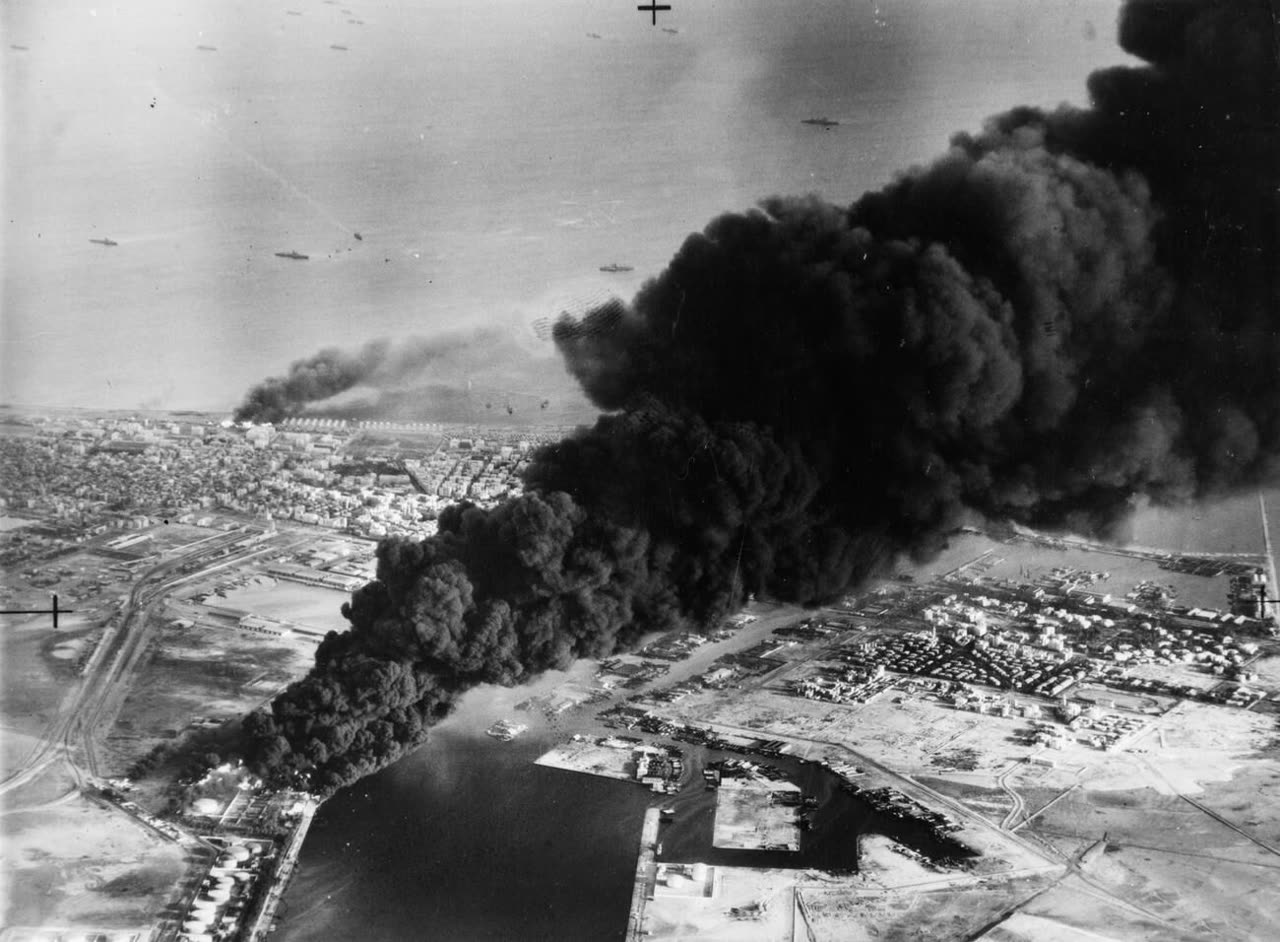
In November 1956, British motorists were rationed to four gallons of petrol a month. Egypt had nationalised the Suez Canal, Britain and France had intervened militarily, an oil embargo followed, and suddenly the roads of a country that had built its identity on big, comfortable saloons were filling up with something nobody quite expected: German bubble cars. Small, strange, often genuinely awful to drive — but they did over 40mpg, and in a fuel crisis, that was everything.
British Motor Corporation's chairman, Leonard Lord, hated them.
November 1956, Port Said, Suez canal, Egypt.
What exactly was a “bubble car”
The name wasn't a joke or an insult — it was a fairly literal description. These were tiny, egg-shaped microcars built by German manufacturers in the 1950s, many of them — including Messerschmitt — aircraft companies that had been banned outright from building planes after the war and needed something, anything, to keep their factories running. The rounded, canopy-like bodywork and aircraft-style entry hatches gave them their nickname.
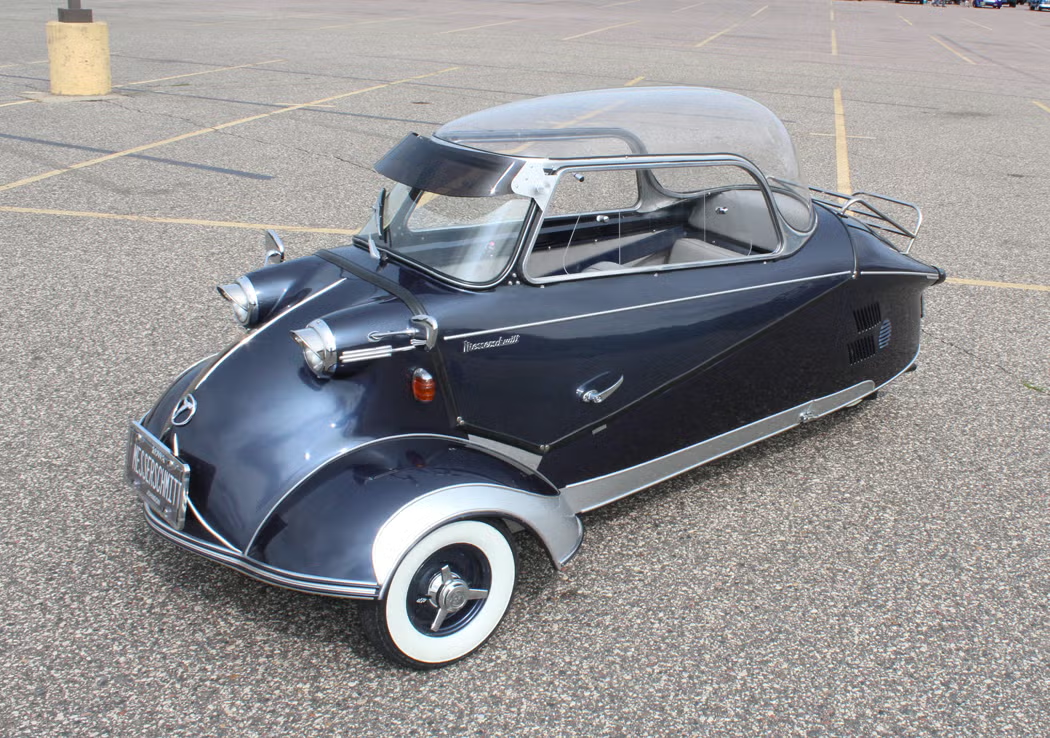
The Messerschmitt KR200 seated two people in tandem, one behind the other exactly like a fighter cockpit, under a hinged Perspex canopy borrowed straight from the company's aviation heritage.
The Messerschmitt KR200 — an aircraft company's answer to a post-war ban on building planes.
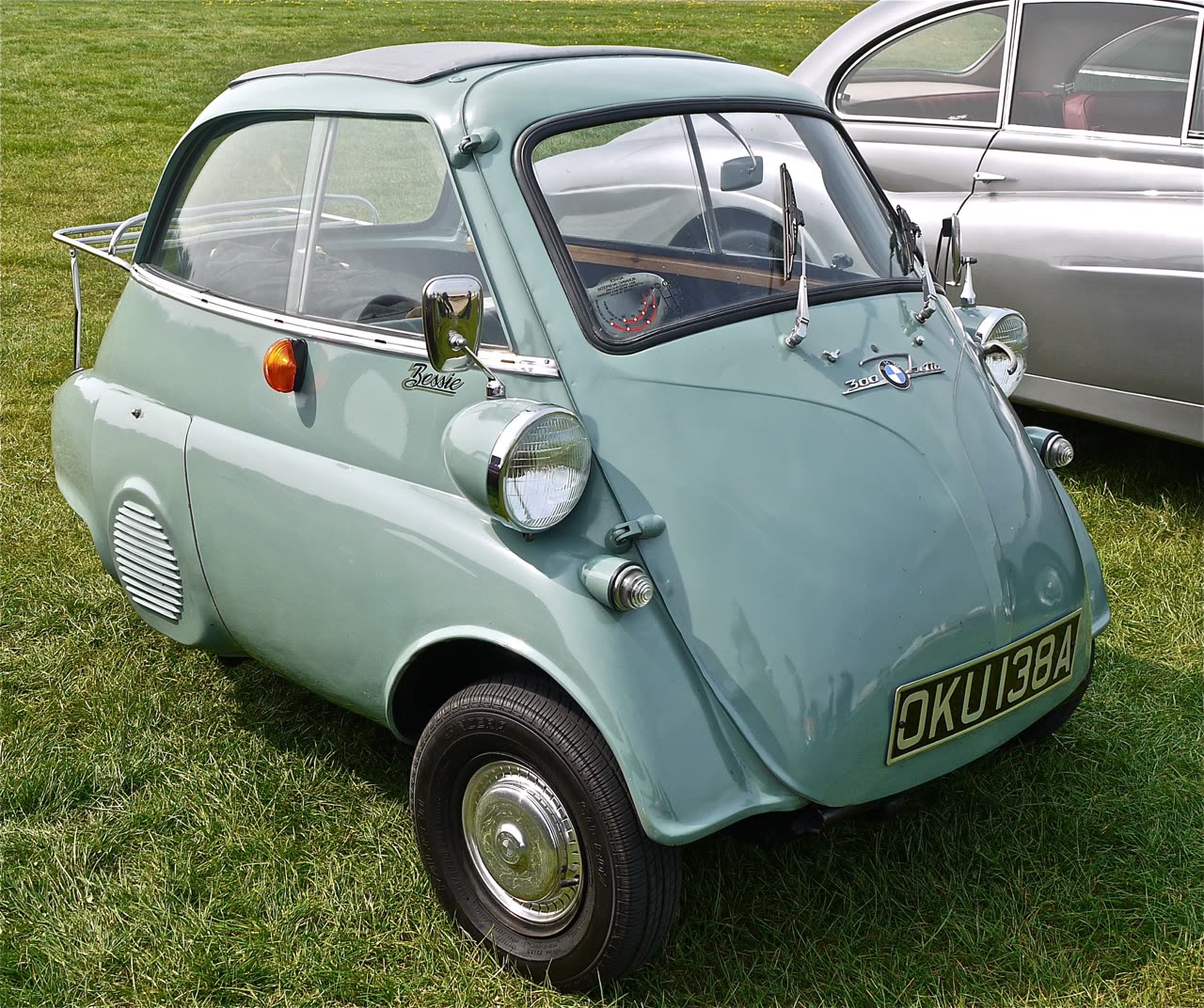
The BMW Isetta went further still — the entire front of the car, steering wheel included, swung open as a single door. Neither was remotely practical by modern standards. Both were genuinely popular.
The BMW Isetta — the entire front of the car swung open as a single door. Absurd by modern standards; a genuine sales hit in its time.
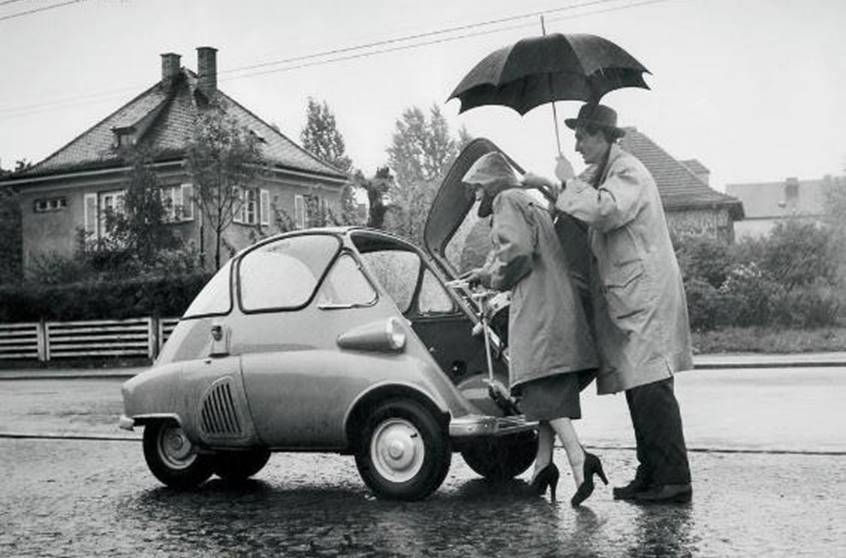
And crucially, they weren't some obscure curiosity glimpsed occasionally on British roads — they were sold here in real volume, through proper dealer networks, and in some cases built here outright. The Isetta was assembled under official BMW licence in a former railway works in Brighton from 1957, fitted with BMW's own engines.
The Isetta built in Brighton from 1957 under BMW licence — not imported curiosities, but British-assembled cars sold through proper dealers.
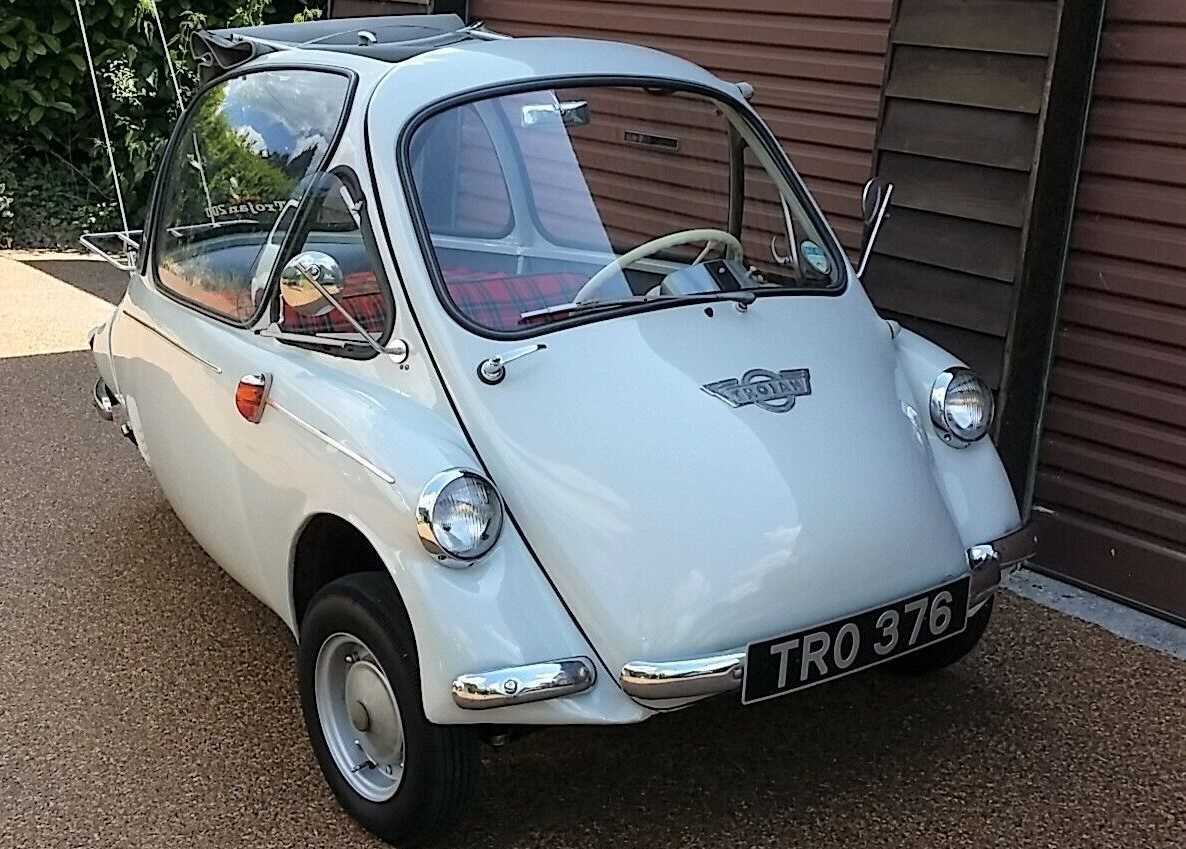
The Heinkel Kabine followed the same path from 1961, rebadged for the British market as the Trojan. The Messerschmitt had its own dedicated UK concessionaire, Cabin Scooters (Assemblies) Ltd, who imported and assembled the cars and built out an extensive dealer network around them.
The Heinkel Kabine, rebadged as the Trojan for British buyers — sold through a mainstream dealer network as a legitimate alternative to a small car.
British tax law even bent around them. The four-wheeled Isetta initially struggled to sell in Britain because it was taxed as a full car — until 1959, when a three-wheeled version was introduced specifically so it could be driven on a motorcycle licence and taxed at a far lower rate. The Suez Crisis didn't just create demand for these cars in Germany — it turned them into a genuine, briefly thriving segment of the British car market.
“Never, never copy the opposition”
Leonard Lord wasn't a man who did anything quietly. He is remembered as blunt to the point of theatrical, and when he looked at the bubble cars multiplying on British roads, his reaction wasn't concern — it was something closer to personal offence. He decided, on the spot, that BMC would build a proper miniature car and drive every last one of those things off the street.
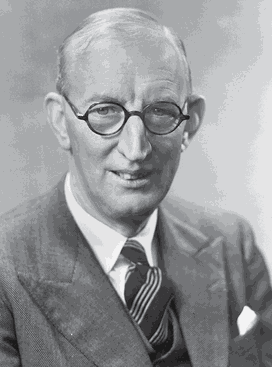
Leonard Lord, British Motor Corporation chairman.
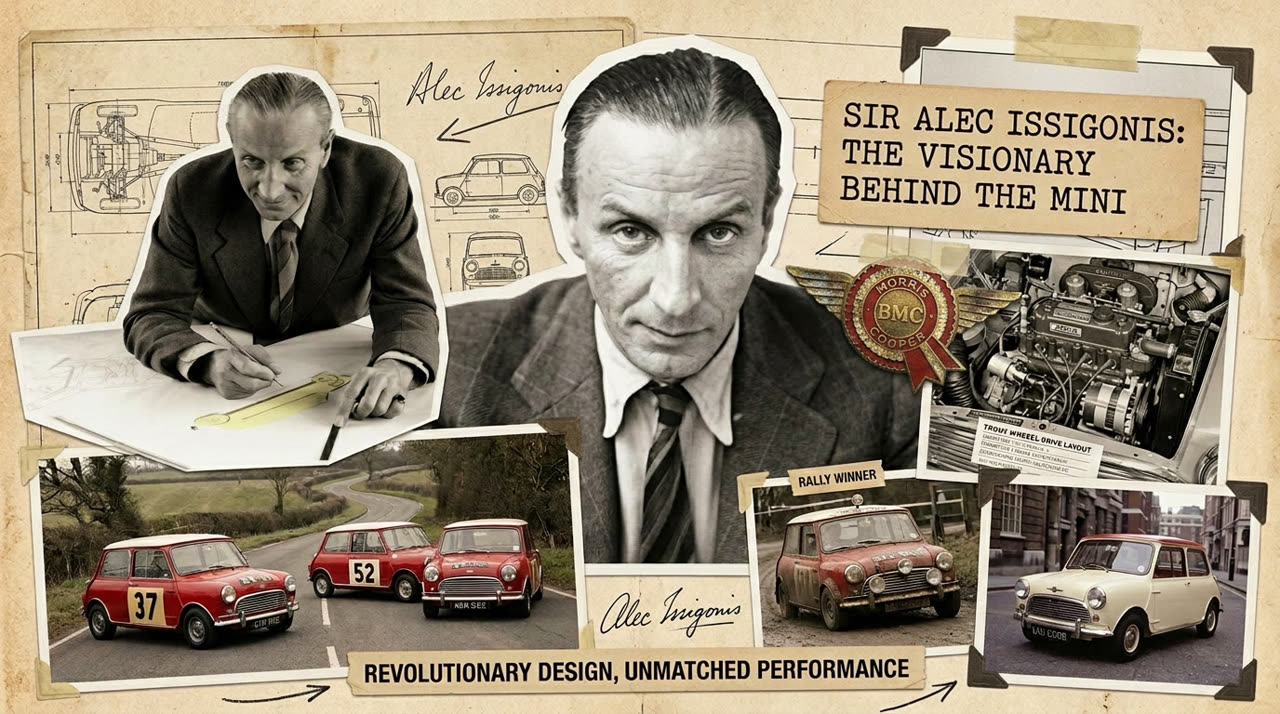
For that job he turned to a man he'd already tried and failed to keep once before: Alec Issigonis. Born in Smyrna — now İzmir, Turkey — to a Bavarian mother and a Greek father, Issigonis had arrived in London in 1922 as a refugee from the Greco-Turkish war, eventually finding his way into British car design. He'd already given BMC one hit with the Morris Minor. Then Alvis lured him away with the promise of designing a supercar. Lord wanted him back, and by the end of 1955, he had him.
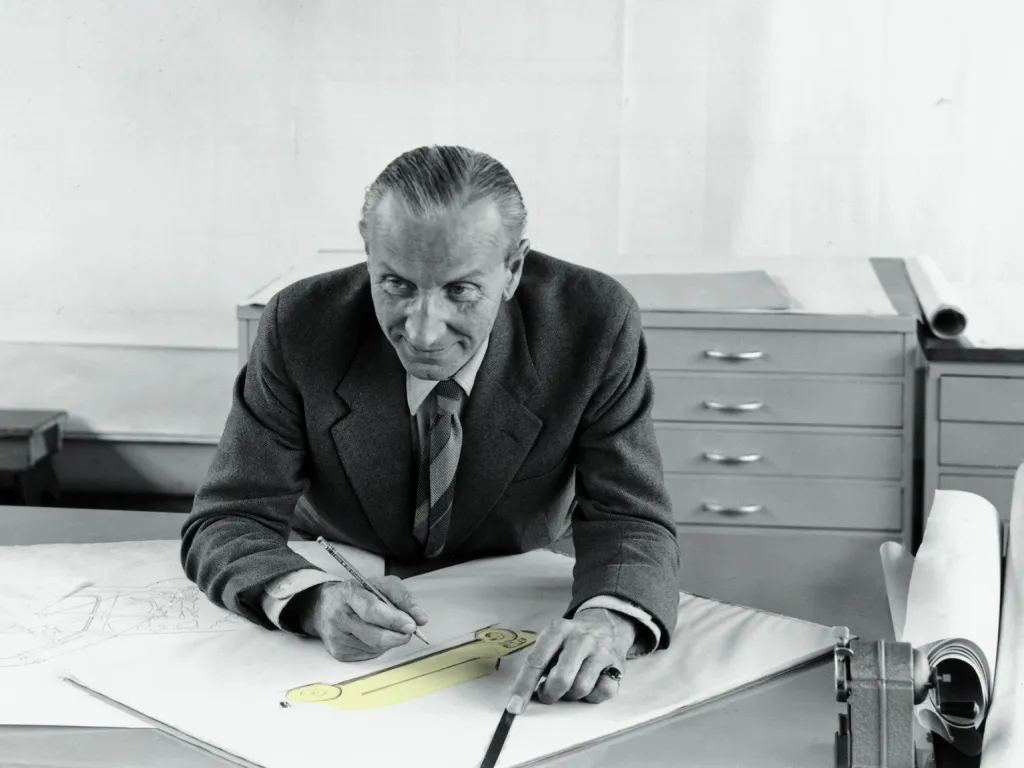
Alec Issigonis — the engineer behind the best-selling British car in history.
Issigonis's own account of what happened next has a wonderful, stubborn simplicity to it: “At Cowley I had an experimental department. They were making a bubblecar. I said, ‘Never, never copy the opposition.’ And there and then I decided on the Mini.”
A brief that read like a puzzle with no solution
Lord's design requirements weren't a gentle nudge in a direction — they were a box, almost literally. The car had to fit within 10 feet long, 4 feet wide, 4 feet high. Passenger space had to occupy 6 of those 10 feet. And to keep costs down, the engine had to be an existing BMC unit, not something built from scratch.
Try to picture what that actually demands: a four-cylinder engine, four proper seats, genuine luggage space, all inside a footprint smaller than most modern superminis' rear overhang alone. Critics at the time didn't believe it could be done economically — several predicted BMC would financially break itself trying.
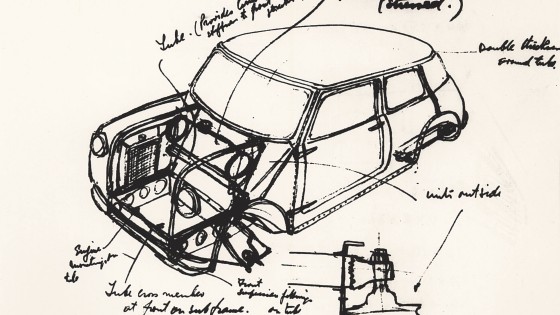
Issigonis's original sketches — transverse engine, gearbox in the sump, wheels at the corners. A solution that broke almost every industry convention.
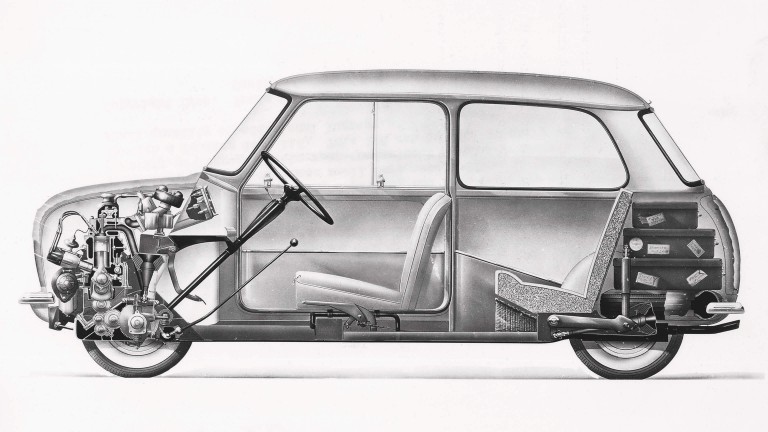
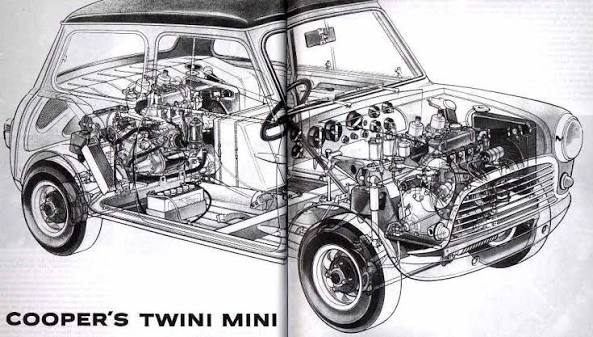
Issigonis's answer was to throw out almost everything the industry considered settled. He mounted the engine transversely — sideways, rather than front to back — with the gearbox built directly into the engine's sump, sharing its oil. He pushed the wheels out to the absolute corners of the car, tiny 10-inch Dunlop wheels that shrank the wheel arches intruding into the cabin. He replaced conventional springs with compact rubber cones, nicknamed “doughnuts,” that saved space at the cost of a genuinely stiff, bumpy ride. The result gave over 80% of the car's total footprint to passengers and luggage — a ratio the industry had never come close to before.
The cut-away view tells the whole story: transverse engine, gearbox in the sump, wheels at the corners. Over 80% of the footprint given to people, not machinery.
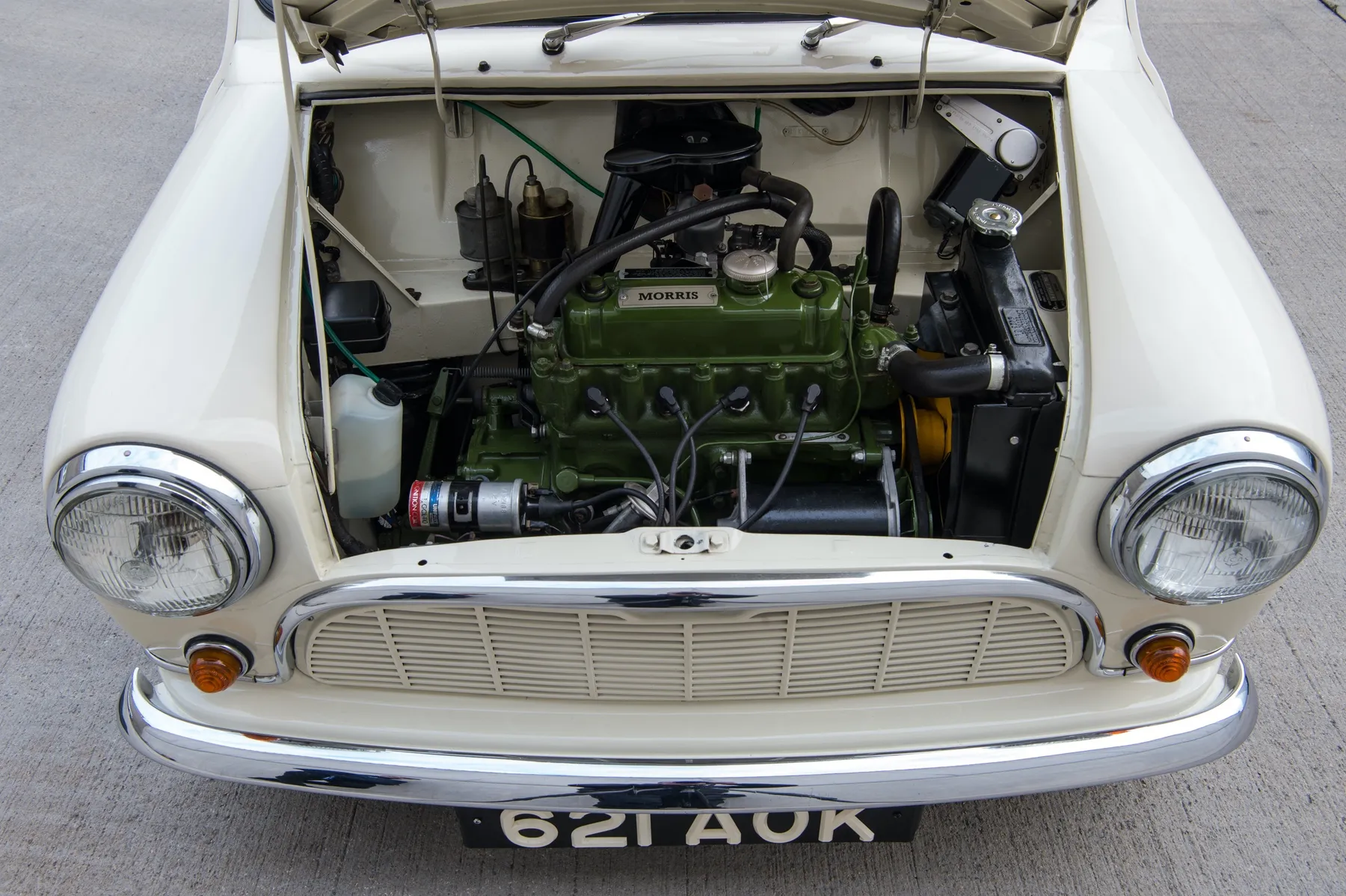
The original 1959 Mini engine mounted transversely — sideways across the car. A layout that redefined how small cars are built.
Working alongside him was a startlingly small team — fewer than ten people, including John Sheppard and Chris Kingham, both poached with him from Alvis, and Jack Daniels, who'd worked with him on the Minor. By July 1957, that tiny group had built the first prototype: XC9003, nicknamed the “Orange Box” for its colour. Lord test-drove it around the Longbridge factory grounds and turned to Issigonis with an instruction that needed no elaboration: “Build the bloody thing!” From that moment to the car being in showrooms took roughly nine months.
No radio. No window winders. No seat belts. But definitely an ashtray.
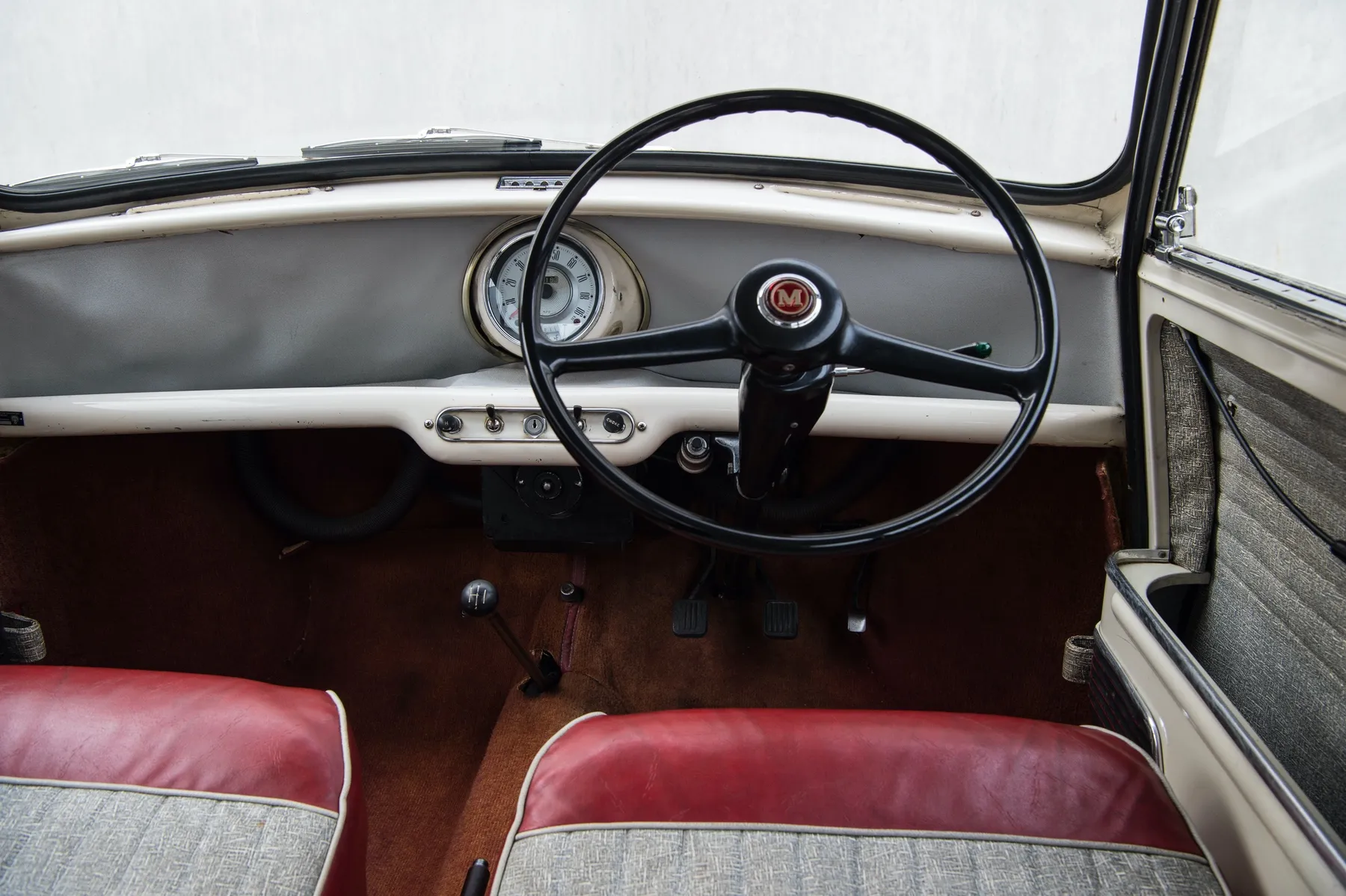
To hit both the weight and cost targets, Issigonis stripped the car of almost everything that wasn't structurally necessary. No radio. No proper window winders — early cars used sliding windows instead. No seat belts as standard. Every gram mattered.
The original Mini interior: sliding windows, a central speedo, no radio, no frills. And one ashtray — Issigonis was a committed chain-smoker.
And yet, in the middle of all that austerity, Issigonis made sure the car had an ashtray. He was a committed chain-smoker, and whatever else got cut, that wasn't going to be one of them — a small, very human detail sitting right next to some of the most radical engineering decisions of the decade.
His feelings about styling for its own sake were just as uncompromising as his feelings about bubble cars. “Styling is designing for obsolescence,” he once said. “I will not design cars for people who like to leave them outside their front gate.” When an American once praised flamboyant American car styling to him, Issigonis shot back without hesitation: “I think you are really ashamed of your car. That's why you make them look like Zeppelins.”
That philosophy nearly cost the car its face. When BMC's managing director George Harriman was shown the first pre-production Mini, plain, unadorned, entirely function over form, he was unimpressed. He's alleged to have told Issigonis bluntly: “What a bloody mess! We'll never sell that. Spend another few quid on it, Alec, and jazz it up a bit. Put some chrome plate on it or something.” The styling department obliged, adding a grille and modest chrome trim — the only real concession the “anti-styling” designer was forced to make to the car that would go on to define an entire era of British style regardless.
Two names, one car, and a very British compromise
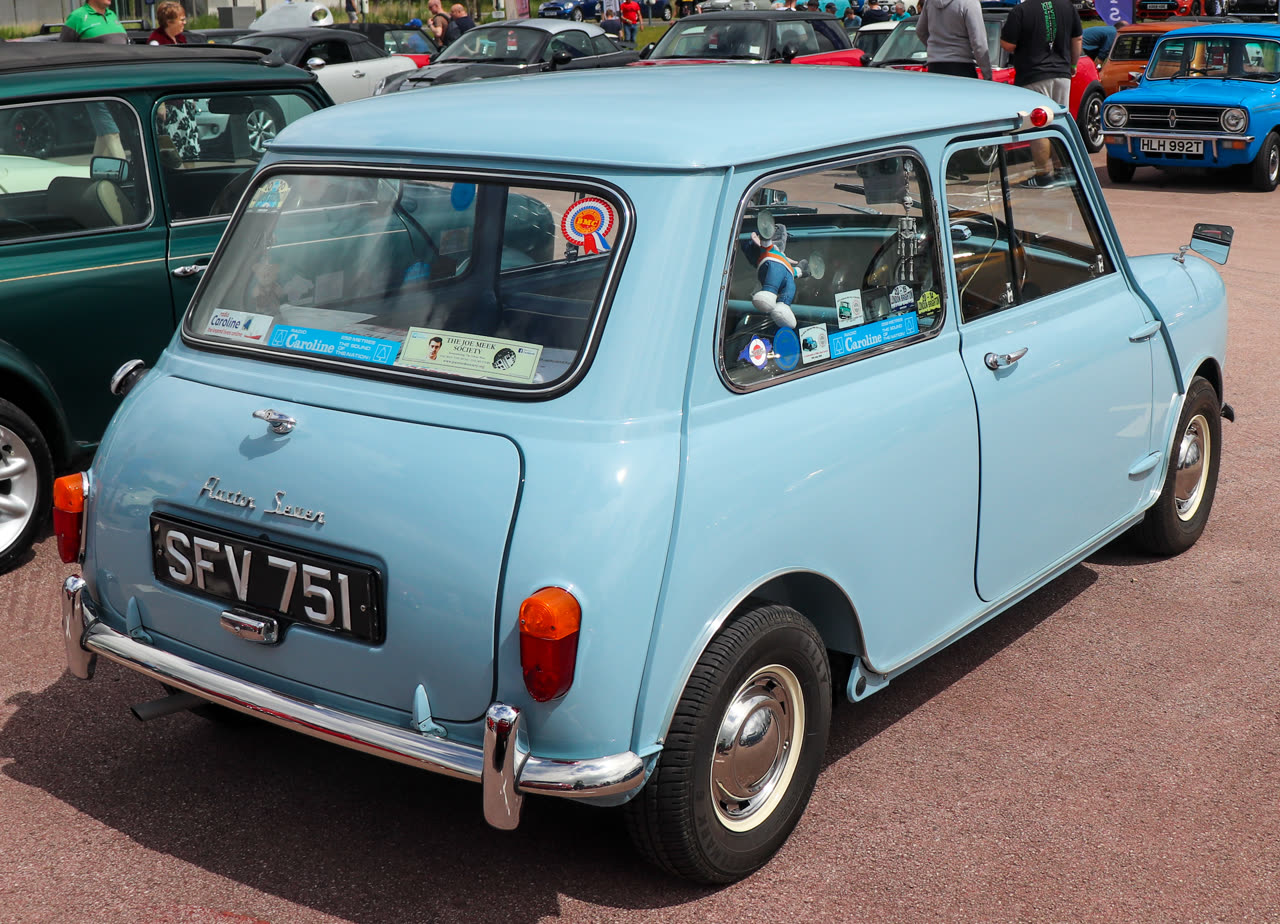
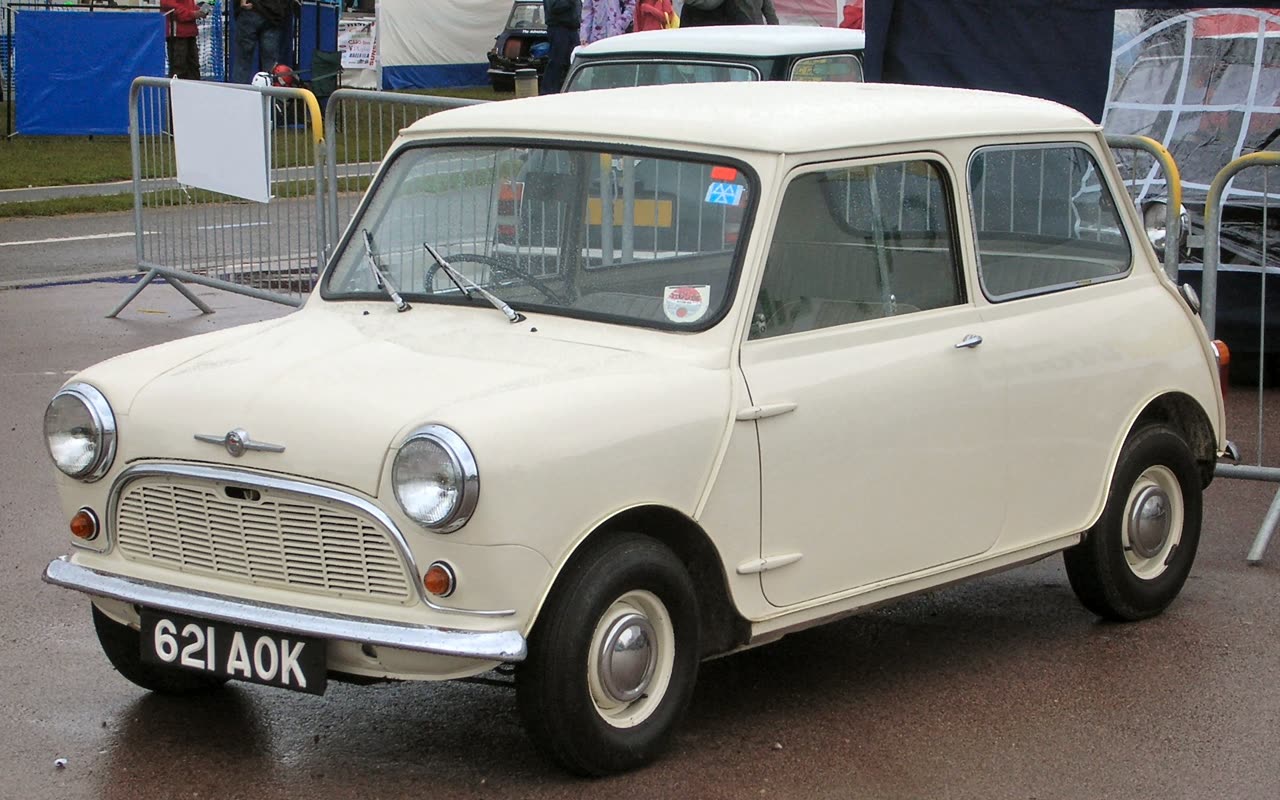
When the car launched on 26 August 1959, it didn't appear under one name — it appeared under two. The Austin Seven, built at Longbridge, and the Morris Mini-Minor, built at Cowley. Both were mechanically identical, distinguished by little more than trim and badging. The reason was pure brand politics: Austin and Morris had been fierce rivals before merging into BMC in 1952, and BMC wasn't yet willing to let either name's loyal customer base feel abandoned. It would take a full decade, until 1969, before “Mini” stood alone as its own marque, no longer hiding behind either parent name.
The Austin Seven at launch — one of two names the Mini wore on 26 August 1959. Brand politics, not engineering, demanded both.
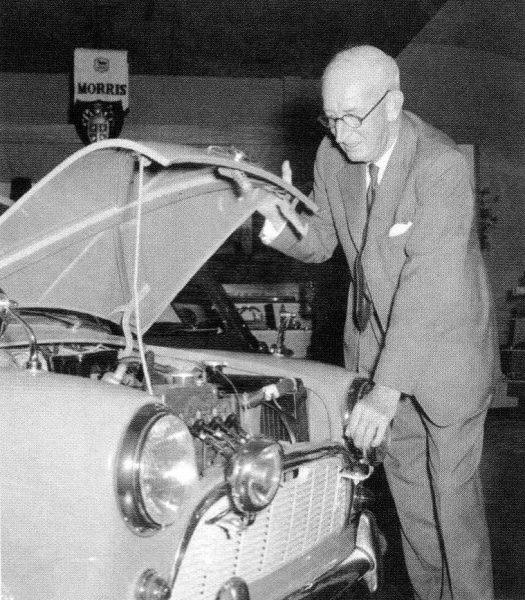
The Morris Mini-Minor — mechanically identical to the Austin Seven, built at a different factory, distinguished only by badging and trim.
At £496 for the basic Austin Seven, the car was cheap — but nobody, including BMC itself, initially grasped what they'd actually built. First-year production sat at a modest 20,000 cars. It took time for the public to catch up to the idea that something this small could genuinely swallow four full-grown adults and their luggage without compromise.
The racing driver who saw what BMC couldn't
The person who arguably understood the Mini's real potential faster than its own manufacturer was John Cooper — a Formula One constructor fresh off building championship-winning race cars. Cooper looked at Issigonis's tiny, wheels-at-the-corners economy car and saw something BMC hadn't fully clocked themselves: a genuinely brilliant handling chassis, hiding in plain sight inside a shopping car.
The result was the Mini Cooper in 1961, followed in 1963 by the far more serious Mini Cooper S, its 1071cc engine capable of nearly 100mph. From 1964 the Cooper S carried a 1275cc engine — the version still most sought after by collectors today, the one that came to define exactly what “Cooper S” means to anyone who knows the car.
John Cooper and the twin-engine Mini experiment — a Formula One constructor who looked at an economy car and saw a racing chassis.
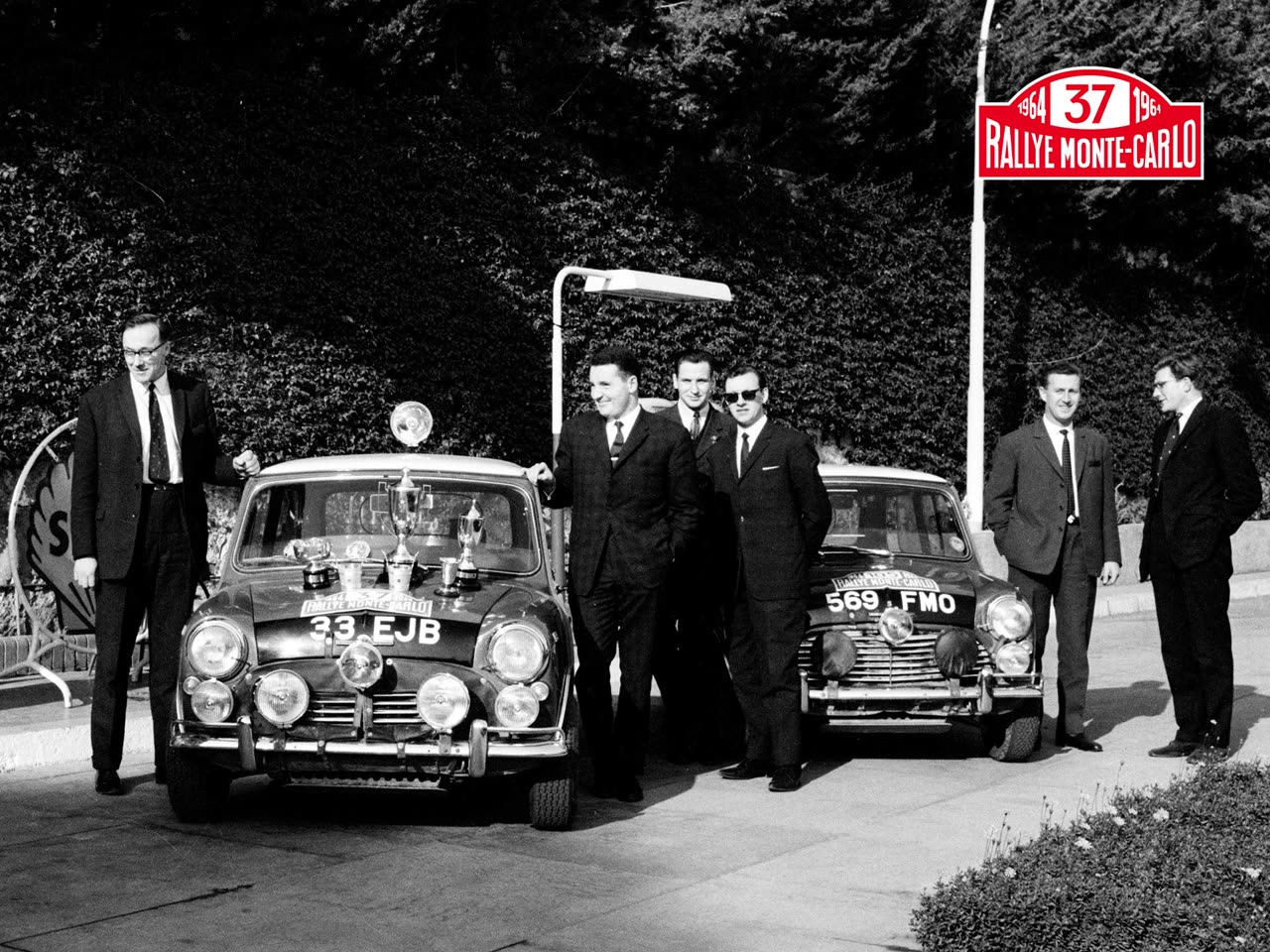
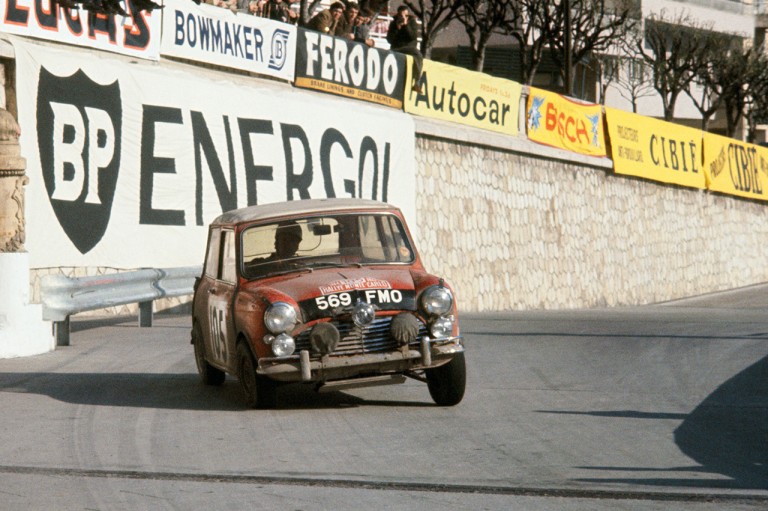
What followed was a run of motorsport results that had no business coming from a car this small and this cheap. The Mini Cooper S won the Monte Carlo Rally three times — 1964, 1965, and 1967 — in the hands of drivers like Paddy Hopkirk, Rauno Aaltonen, and Timo Mäkinen. A car designed to solve a fuel crisis was, within a few short years, humiliating far larger and more expensive machinery on some of the toughest rally stages in Europe. It also, in the process, delivered exactly what Lord had set out to do in the first place — bubble car sales collapsed as buyers switched to a real car for similar money, and by the early 1960s, Britain's brief love affair with the Isetta and the Messerschmitt was effectively over.
The Mini Cooper S on the Monte Carlo stages — humiliating machinery twice its size on some of the toughest roads in Europe.
Three wins: 1964, 1965, and 1967. A car built to beat bubble cars ended up beating Europe's best rally machinery.
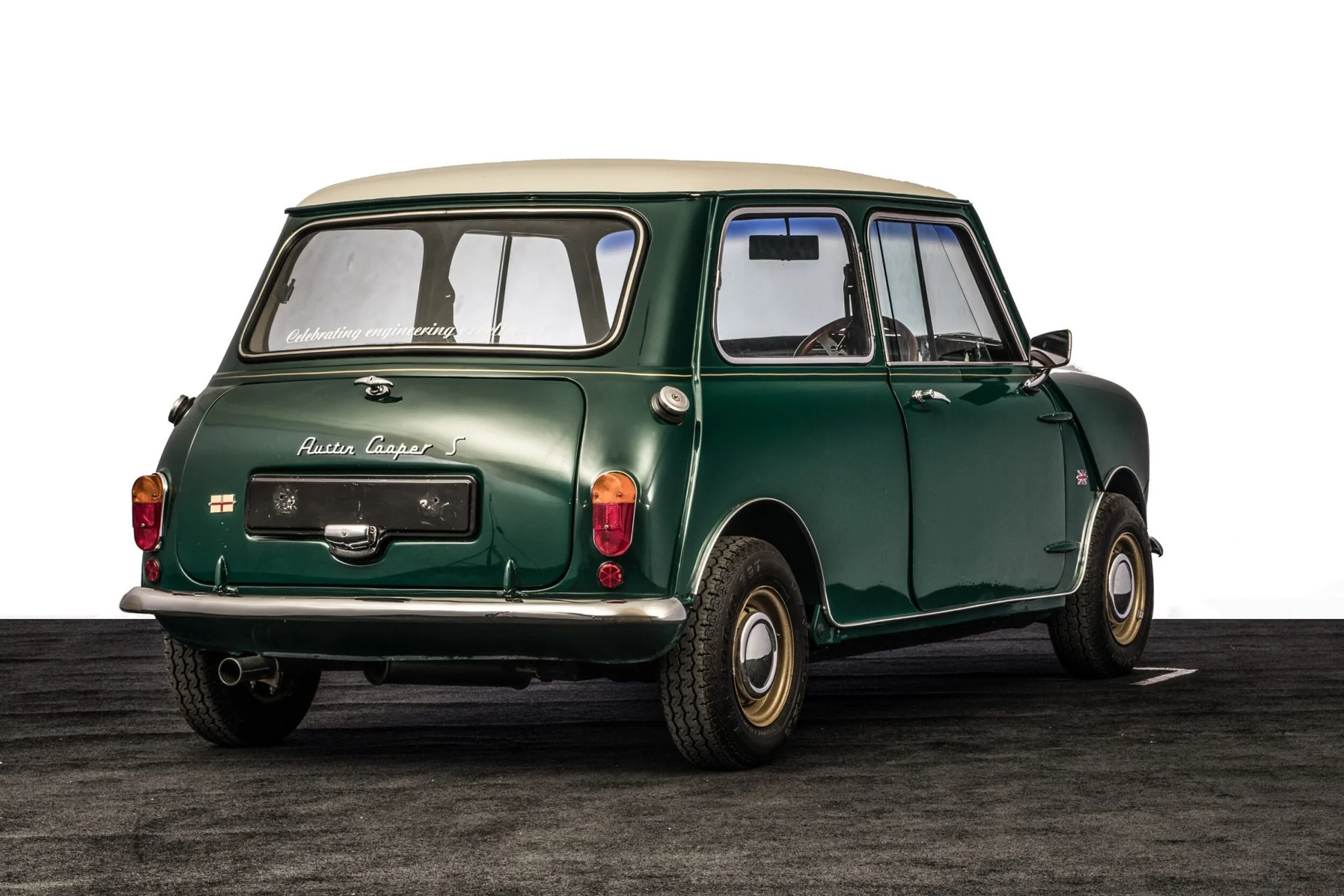
The 1964 Mini Cooper S — the version collectors still seek out today.
Five million cars, and a designer who never stopped tinkering
By 1969 the Mini had passed two million sales. It went on to become the best-selling British car in history, with a production run stretching from 1959 to 2000 and a final tally of roughly 5.3 million cars — a number no other British car has come close to matching before or since.
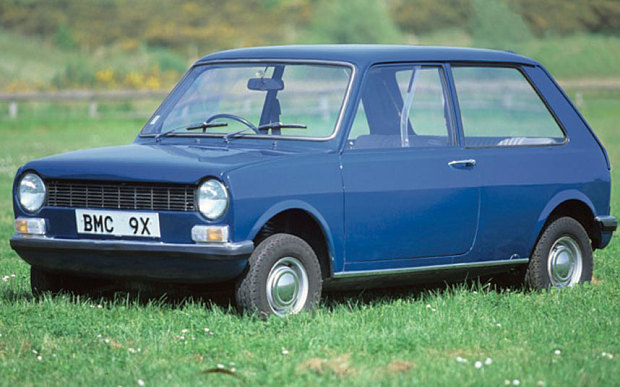
Issigonis himself never really let go of the idea of doing it again, better. Later in his career he became consumed by a project codenamed 9X — a Mini replacement he described in his own words as “bigger, better, smarter, cheaper, more profitable.” Smaller, lighter, cheaper to build, with a radically simplified engine. Prototypes were built and tested. But British Leyland, the sprawling conglomerate BMC had by then become part of, was already sliding into the financial crisis that would define British car manufacturing's darkest years, and 9X never reached production — a footnote that still strikes Mini enthusiasts today as one of the great “what ifs” of British automotive history.
The 9X prototype — smaller, lighter, cheaper to build than the original Mini. British Leyland's collapse killed it before it reached production.
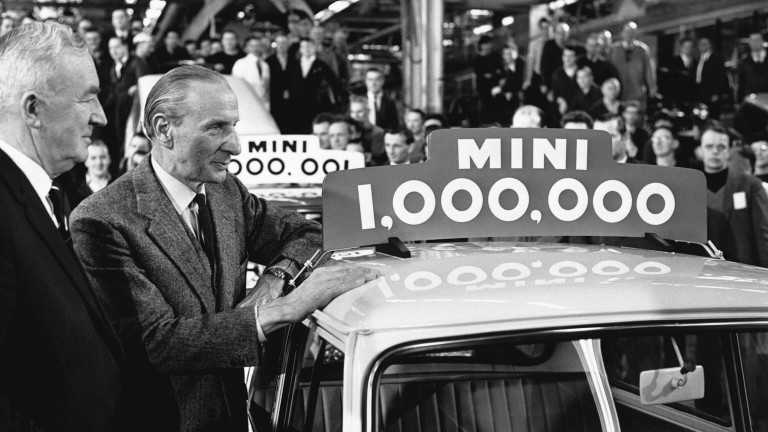
Alec Issigonis with the one millionth Mini — a car designed in nine months had become Britain's best-seller.
Sir Alec Issigonis died on 2 October 1988, in Birmingham, the city that had built his most famous creation. He'd been knighted in 1969 and made a Fellow of the Royal Society in 1967 — extraordinary recognition for a man who once summed up his entire design philosophy in a single blunt sentence: cars, he said, were ceasing to be status symbols and becoming necessary household objects, and the only thing that actually mattered was that they be compact and robust.
“The English Patient”
What happened to the company Issigonis left behind is its own strange, almost tragic postscript. By the early 1990s, the Mini's corporate home had become the Rover Group, a shrunken remnant of what British Leyland once was, still building the original Mini in dwindling numbers alongside newer models nobody particularly wanted. In January 1994, BMW bought Rover Group outright from British Aerospace for $1.3 billion — and inside BMW, the acquisition quickly earned a bitter nickname among its own executives: “the English Patient.”
The purchase nearly took BMW down with it. Rover haemorrhaged money for years under German ownership, hampered by a strong pound that made its exports uncompetitive, and the fallout eventually cost BMW's own chairman, Bernd Pischetsrieder, his job in 1999. But buried inside that troubled acquisition was the one asset BMW had actually wanted all along: the Mini name itself.
Two design studios, a secret rivalry, and one October afternoon that decided everything
What happened next has genuinely never been given the credit it deserves in most retellings of the Mini story. From roughly 1993 onward, two entirely separate design teams — one in Britain, one in Germany — began sketching what a new Mini should look like, each unaware for some time that the other was doing exactly the same thing.
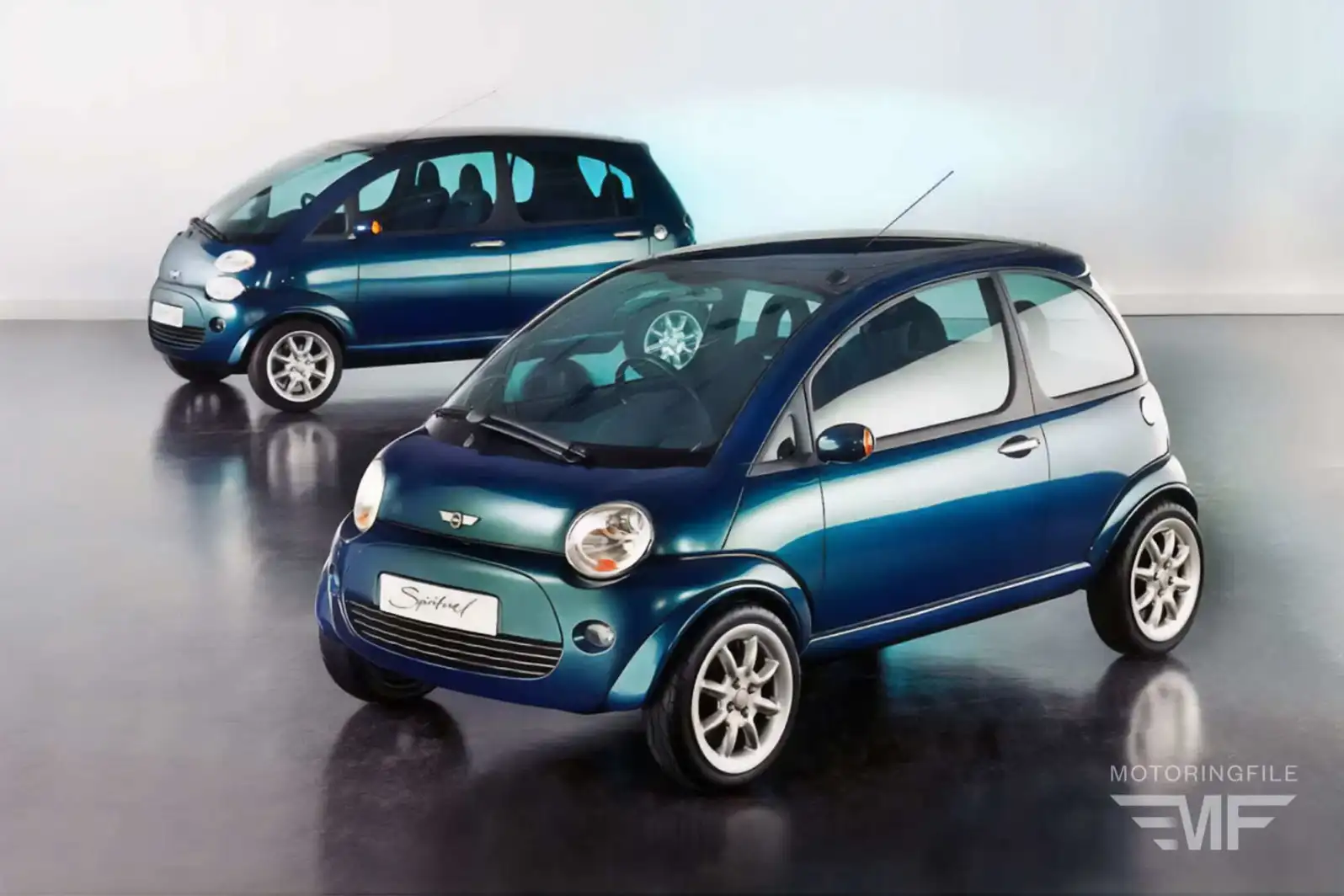
In Britain, at Rover's Gaydon studio, newly appointed design director David Saddington handed the job to two young designers, David Woodhouse and Oliver Le Grice. Their brief, as they saw it, was to stay true to Issigonis's original spirit: small, radically space-efficient, built for a future of more people, less space, and more expensive fuel — essentially asking what the original 10-foot brief would look like solved again, from scratch, for the 1990s. What emerged were the Spiritual and Spiritual 2 concepts, one of the more radical departures ever proposed under the Mini name — a flat three-cylinder engine mounted beneath the rear seats, driving the rear wheels, packaged into a four-seat family car just 3.1 metres long, the same footprint as the 1959 original.
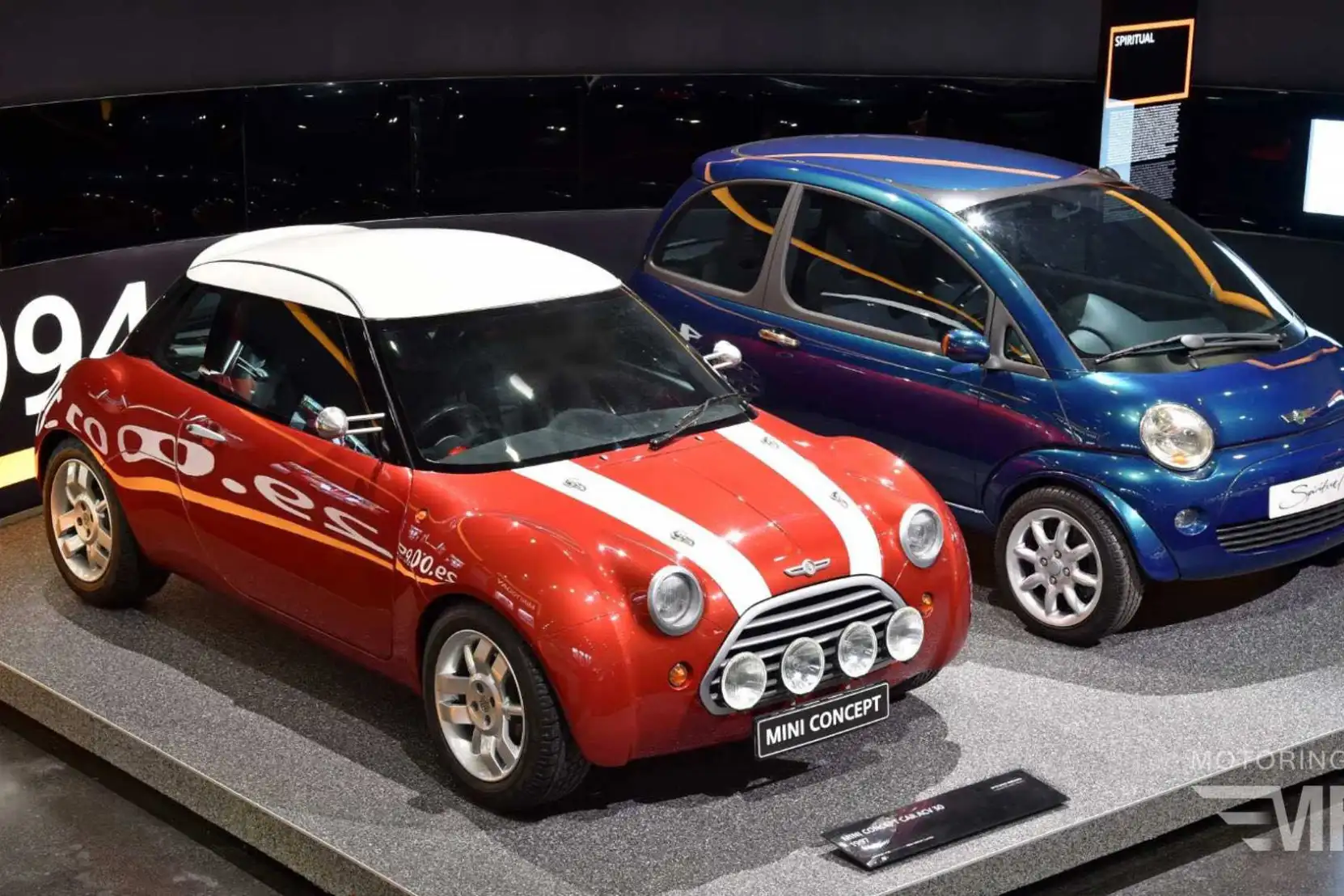
The Rover Spiritual Concept, 1997 — Rover's vision for a new Mini. Radical, space-efficient, and ultimately rejected.
In Munich, under design chief Chris Bangle, the instinct was the opposite. Bangle's own justification was blunt: “We thought it unfair to put the new Mini in the shadow of the old one.” Rather than a literal re-solving of Issigonis's brief, BMW wanted evolution in the spirit of Porsche's 911 — a car that felt like a natural progression rather than a radical rethink, prioritising performance and a small sports car character over economy-car practicality. One of BMW's own proposals from this period, the ACV 30, was designed by a young stylist named Adrian van Hooydonk — who would go on, years later, to become head of design for the entire BMW Group, meaning every modern MINI built since has ultimately answered to the designer of that one 1990s concept car.
BMW's ACV30 concept, 1997 — designed by Adrian van Hooydonk, who would go on to lead BMW Group design. The direction that won.
Neither side fully realised how far along the other's project was until a single decisive meeting — 17 October 1995, at the British Motor Industry Heritage Trust centre at Gaydon — where both teams presented their full-scale proposals to BMW's board simultaneously. Rover brought three complete concept cars. BMW is thought to have brought somewhere between three and six. Both teams left the room convinced they'd won. Rover's marketing staff were confident enough in their reception that they later drafted an internal memo openly criticising BMW's German proposal, arguing it had been styled first and engineered second, calling it merely “better than average” and complaining it lacked genuine innovation.
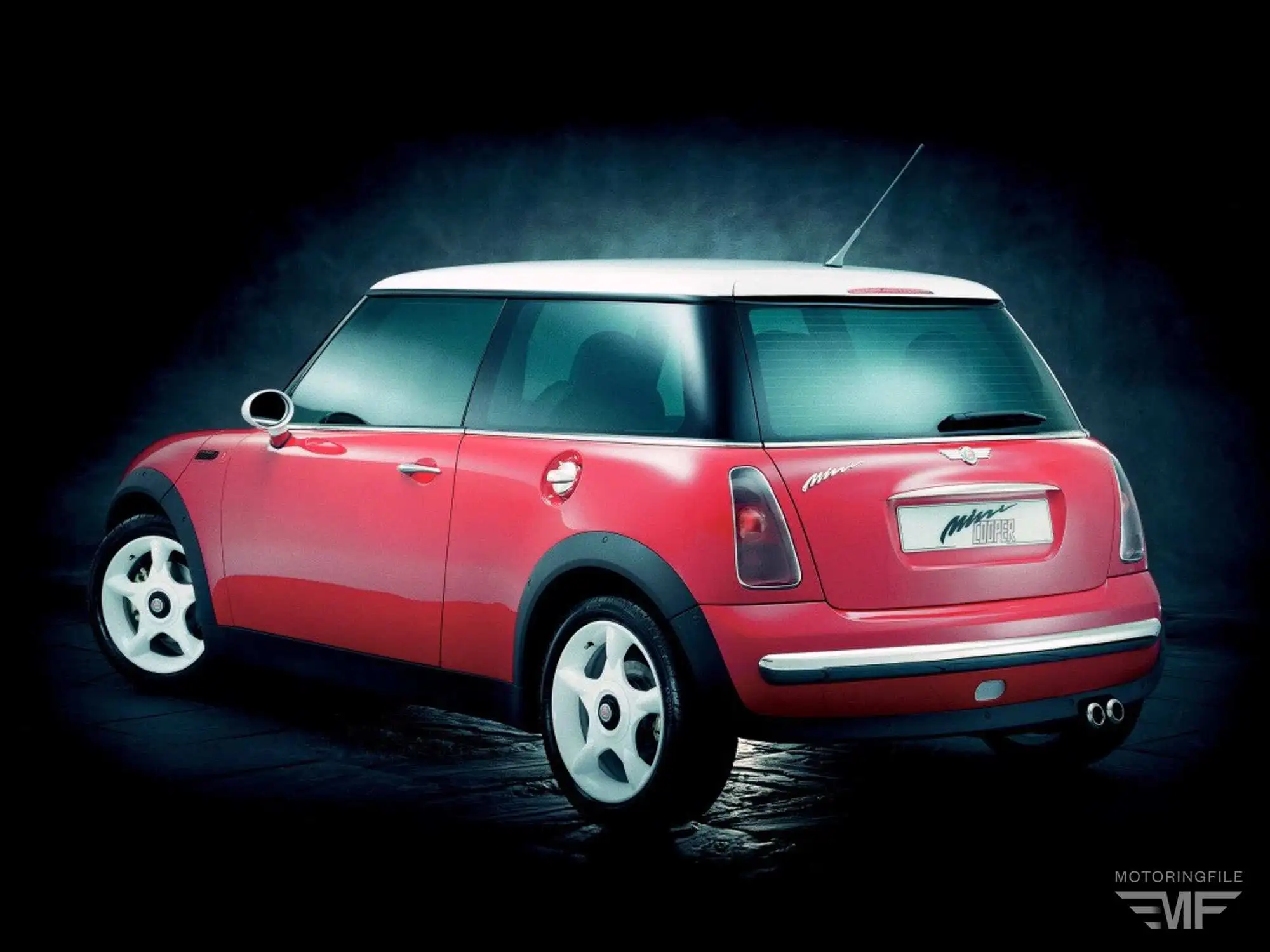
They were wrong about who'd won. BMW's design direction was chosen, and Rover's Spiritual concepts — for all their genuine ambition — were quietly shelved. The car that eventually emerged as the R50 MINI Cooper, revealed to a rapturous reception at the 2000 Paris Motor Show, was unmistakably descended from the Munich vision: retro-styled, premium-positioned, built as a small sports car with a sense of humour rather than a literal reinvention of a 1959 economy car.
The R50 MINI Cooper concept at Paris 2000 — retro-styled, premium-positioned, unmistakably from Munich's vision rather than Gaydon's.
In 2000, having decided the wider Rover business was unsalvageable, BMW sold Rover Group's car-making operations to the Phoenix Consortium for a symbolic £10, while quietly keeping the two things it actually wanted: Land Rover, which it sold on to Ford shortly afterward for £1.8 billion, and the Mini name, which it kept entirely for itself. Rover the company struggled on alone for another five years before finally collapsing in 2005.
Where the Mini stands today
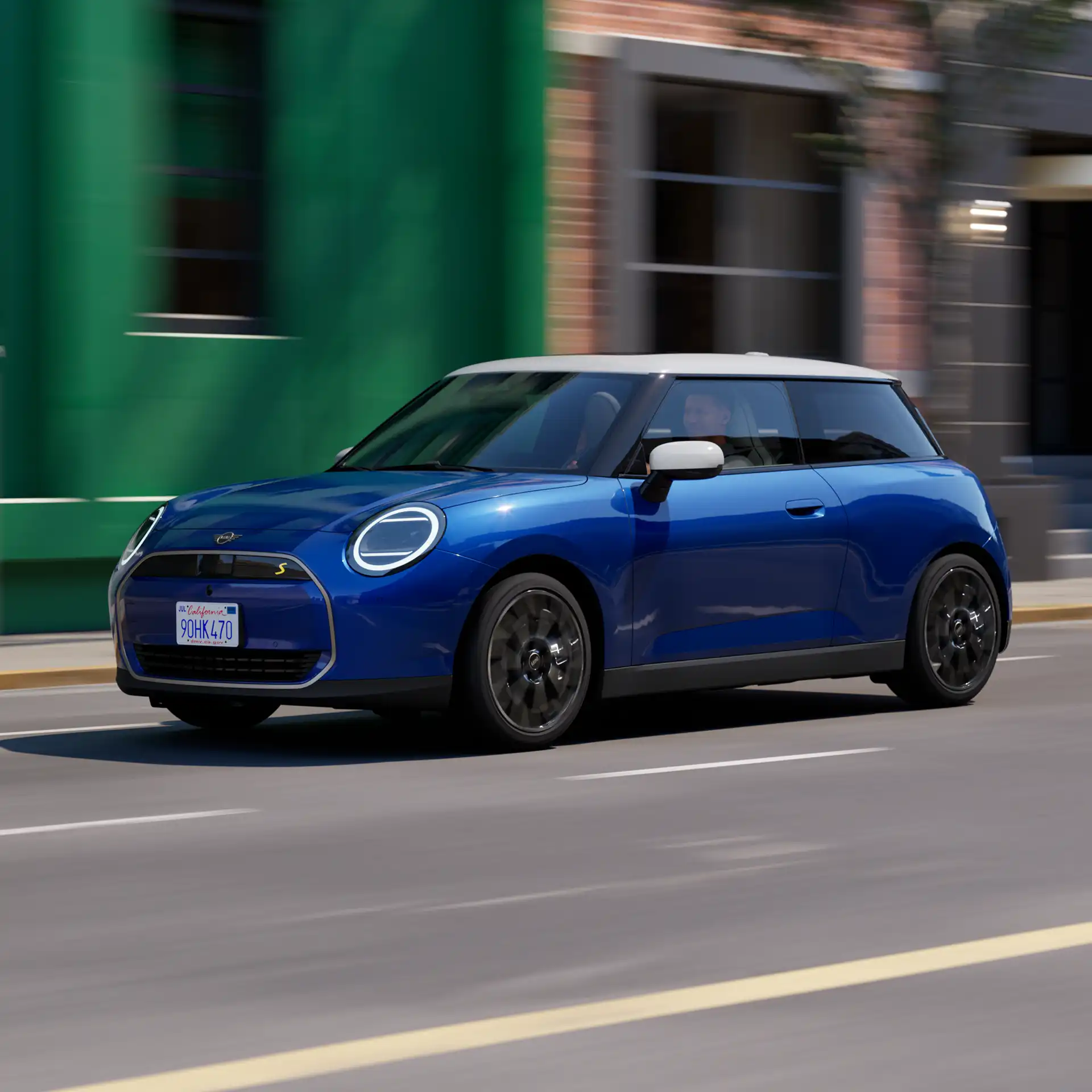
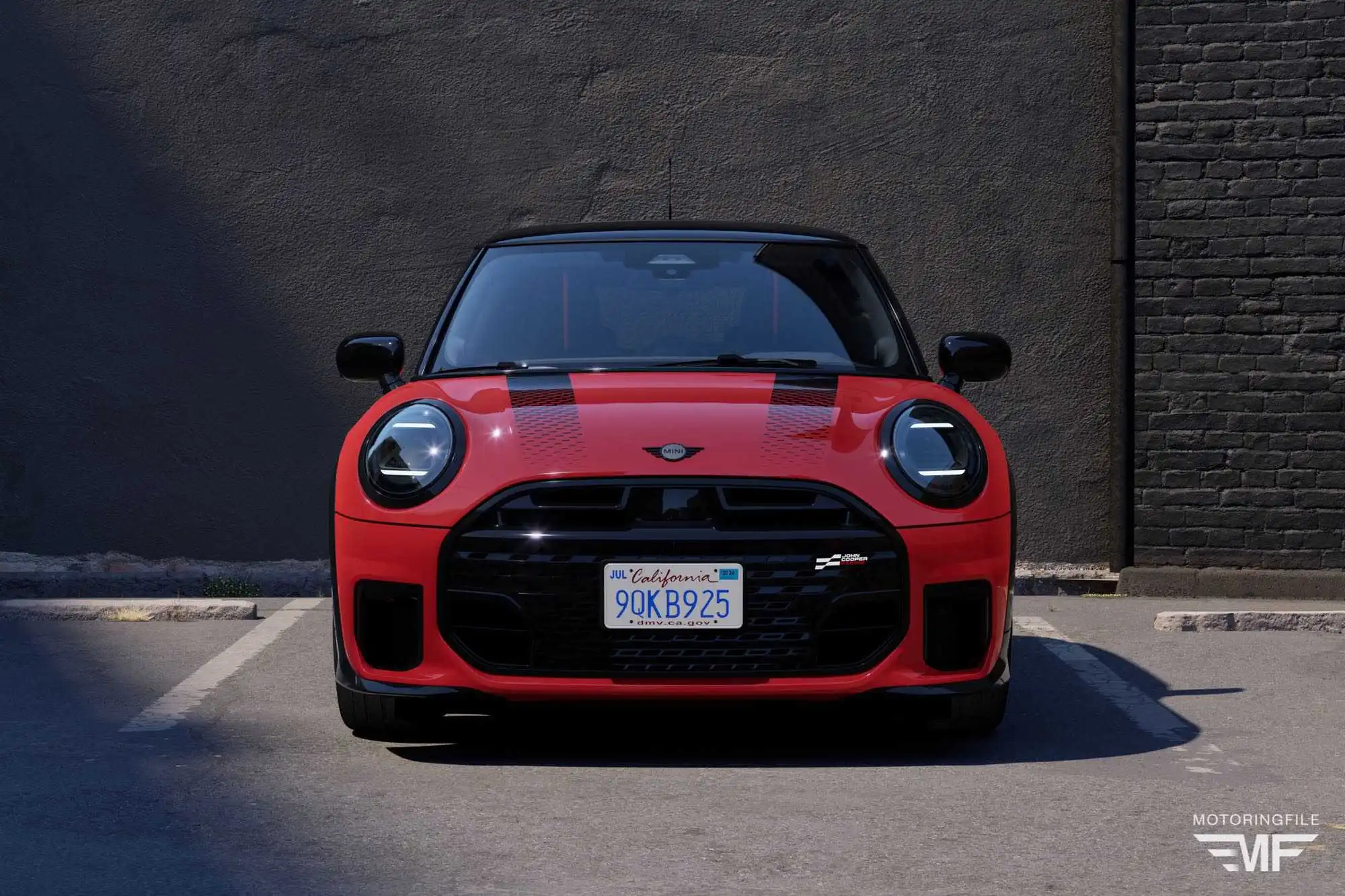
More than a quarter century after that Paris unveiling, MINI — now written as a proper brand name in capitals, distinct from the lowercase “Mini” it evolved from — sits several generations deep into the lineage that October afternoon in 1995 set in motion. The current generation, internally coded F66, launched in 2024 and spans the familiar three-door Cooper hatch, a five-door version, and a convertible, alongside a fully electric Cooper variant built on a dedicated EV platform — a direct, if distant, descendant of the original brief to build something small, clever, and efficient in a time of expensive fuel.
The MINI Cooper Electric — a direct, if distant, descendant of a brief written in 1956 to solve a fuel crisis.
The range has grown well beyond a single hatchback. The Countryman, now in its third generation, has become MINI's largest model by far, including its own dedicated electric version, while the Aceman, introduced as a new electric-only crossover in 2025, fills the gap between the Cooper hatch and the Countryman entirely on battery power. A fifth generation of the core Cooper is already being planned for the 2030s. Whatever shape it eventually takes, it will still trace its lineage back through Munich's 1995 sketches, all the way to a stubborn, chain-smoking engineer who once looked at a German bubble car and simply refused to copy it.
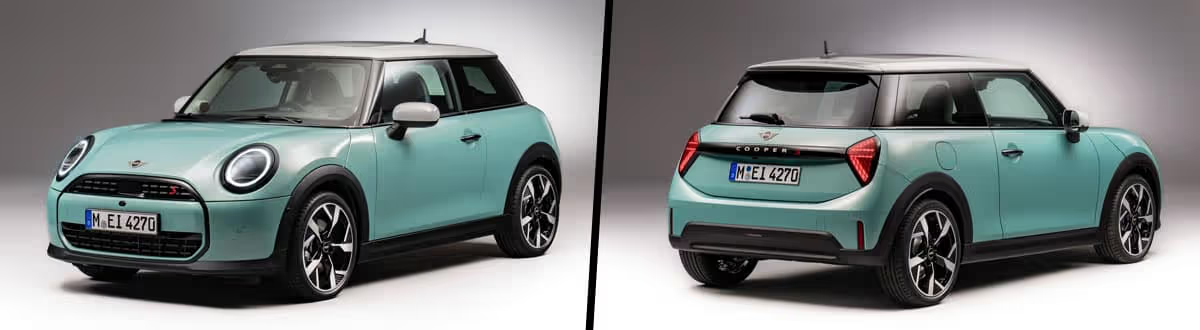
The 2026 MINI Cooper — seven decades on from Issigonis's brief, still recognisably itself.
The current generation: three doors or five, combustion or electric.
The bottom line
The Mini wasn't born from ambition, or a marketing plan, or a grand vision of changing the industry. It was born because one chairman was personally offended by a wave of German microcars that had genuinely taken root on British roads, and gave one stubborn engineer nine months and an almost impossible box of dimensions to fill. What came out of that pressure didn't just solve BMC's problem and see off the bubble car for good — it became the blueprint that nearly every small front-wheel-drive car built since has followed, survived a corporate collapse and a bruising German acquisition that nearly took its new owner down too, and won an internal design war between two rival visions of what it should even mean to be a Mini. It's still, somehow, recognisably itself.
Whatever you're driving today, whether it traces its layout back to Issigonis's original sketches or not, autOracle can help you understand exactly what it needs and what to check before your next MOT.
Know your Mini before you buy it.
Whether it's a classic Cooper S or the latest MINI Electric, autOracle tells you exactly what to check.
Join autOracle waitlistSources
- AROnline, “Mini development story – how BMC made the groundbreaking small car” — aronline.co.uk
- AROnline, “Sir Alec Issigonis: Mini creator and motoring maverick” — aronline.co.uk
- Wikipedia, “Mini” — en.wikipedia.org
- Wikipedia, “Alec Issigonis” — en.wikipedia.org
- Wikipedia, “Isetta” — en.wikipedia.org
- BMW Group PressClub, “Mini: A Brief Global History of the World's Most Loved Car” — press.bmwgroup.com
- Britannica, “Sir Alec Issigonis” — britannica.com
- MotoringFile, “Mini History: A Timeline of the Car That Changed Everything” — motoringfile.com
- MotoringFile, “The Secret War That Shaped the MINI Cooper's Future” — motoringfile.com
- Grokipedia, “Mini (Mark I)” — grokipedia.com
- Grease Monkey Direct, “The Story of the Mini Car - A Timeless British Classic” — greasemonkeydirect.co.uk
- British Classics, “Bubble cars” — britishclassics.uk
- Nostalgia Central, “Bubble Cars” — nostalgiacentral.com
- Classic and Sports Car, “1961 Messerschmitt KR200” — classicandsportscar.ltd.uk
- Oxford Diecast, “Messerschmitt KR200 Model Vehicles” — oxforddiecast.co.uk
- National Motor Museum, “BMW Isetta 300” — nationalmotormuseum.org.uk
- Automotive News, “‘The English Patient’: How Rover purchase brought down BMW” — autonews.com
- The Autopian, “Things Get Complicated When Our English Car Designer Digs Deep Into One Of Britain's Most Iconic Designs: Mini” — theautopian.com