Jul 23, 2026History
Back to blogHistory
The Car That Saved Porsche: The Story of the Cayenne
The autOracle Team
Jul 2, 2026
In 1991, Porsche built 23,060 cars. It sounds like a lot until you understand what it meant for the company: financial catastrophe. The bank accounts were red. The 911, brilliant as it had always been, wasn't selling enough on its own to keep the lights on in Zuffenhausen. And somewhere in a boardroom in southern Germany, executives were staring down a question that felt almost heretical to ask out loud.
What if Porsche built an SUV?
A prediction nobody believed yet
Strange as it sounds, someone had already seen this coming — years before the crisis even hit. Back in 1989, Ferry Porsche, son of the company's founder, made a quiet but confident prediction: “If we build an off-road model according to our standards of quality, and it has a Porsche crest on the front, people will buy it.”
At the time, it must have sounded almost absurd. Porsche was a sports car company. It built the 911. It built things with two doors, low rooflines, and a bloodline stretching back to Ferdinand Porsche himself. An SUV wearing that crest felt, to many inside and outside the company, like a betrayal of everything the badge stood for.
But by the mid-1990s, with the Boxster only just beginning to pull Porsche out of its financial hole, the math was brutally simple. A sports car company with two models couldn't survive on sports cars alone. Something had to change, and management knew it.
The fork in the road: minivan or off-roader
Here's a detail that gets lost in most retellings of this story: the SUV wasn't the only option on the table. Porsche seriously considered building a people carrier — something in the spirit of a Toyota Previa or Honda Odyssey. Picture that for a moment. A Porsche minivan.
It was the U.S. sales organization — Porsche's largest market at the time — that tipped the decision. America was in the grip of an SUV boom, and the sales team made the call: if Porsche was going to build a third model, it needed to be an off-roader, not a minivan. History owes that unnamed sales team a debt of gratitude.
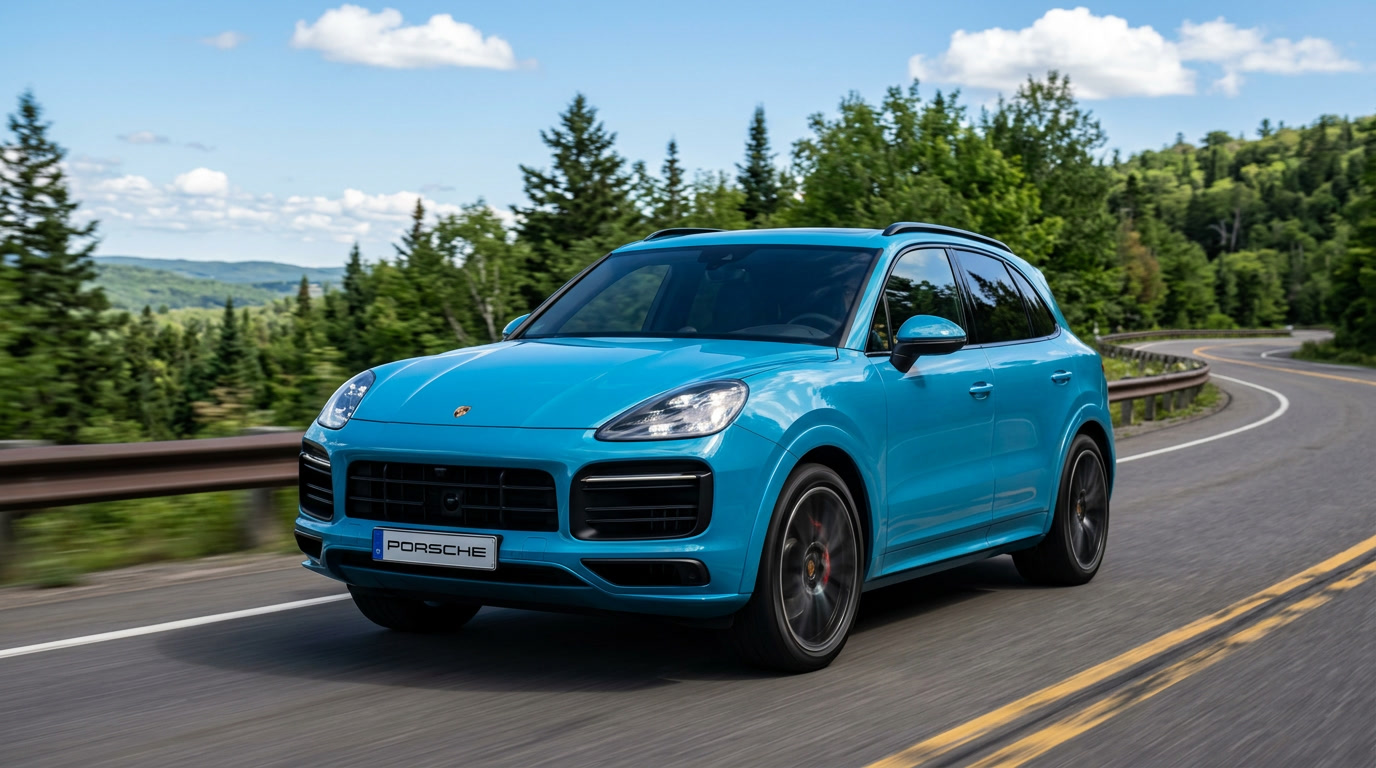
The road not taken was a minivan. The road taken became this.
Project Colorado: the secret built in a fenced-off field
What happened next reads like something out of a spy novel, not a corporate product plan. Porsche didn't have the resources to build an entirely new SUV platform alone — the investment would have been staggering for a company this financially fragile. So in June 1998, they did something almost unthinkable for a brand built on independence: they partnered with Volkswagen.
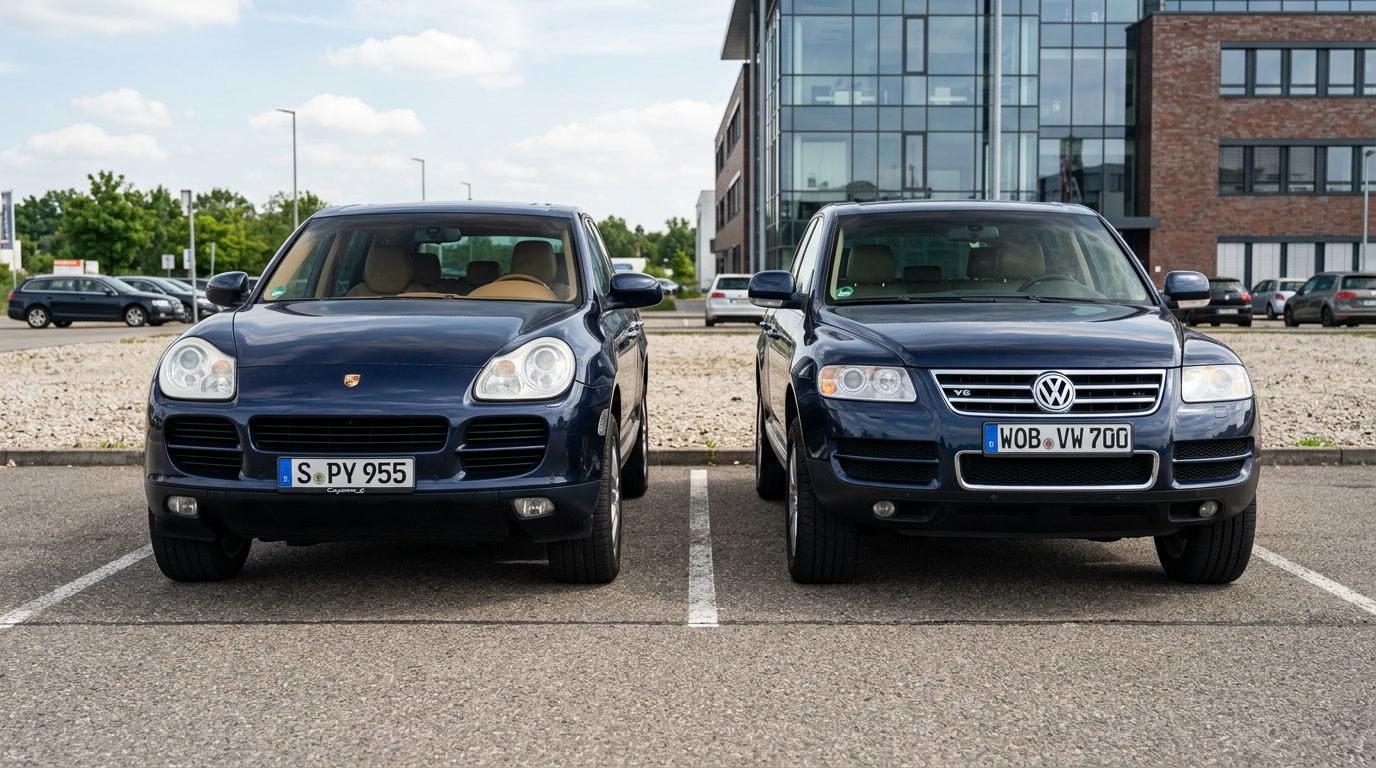
The project was code-named Colorado. Porsche and VW would share a single platform — the same bones underneath both the Porsche Cayenne and the Volkswagen Touareg — while each brand built its own engines, tuned its own suspension, and shaped its own identity on top. Porsche's head of the project at the time, Klaus-Gerhard Wolpert, described the philosophy in an internal newsletter with a phrase that still captures it perfectly: “Simultaneous engineering — this is its heartbeat.”
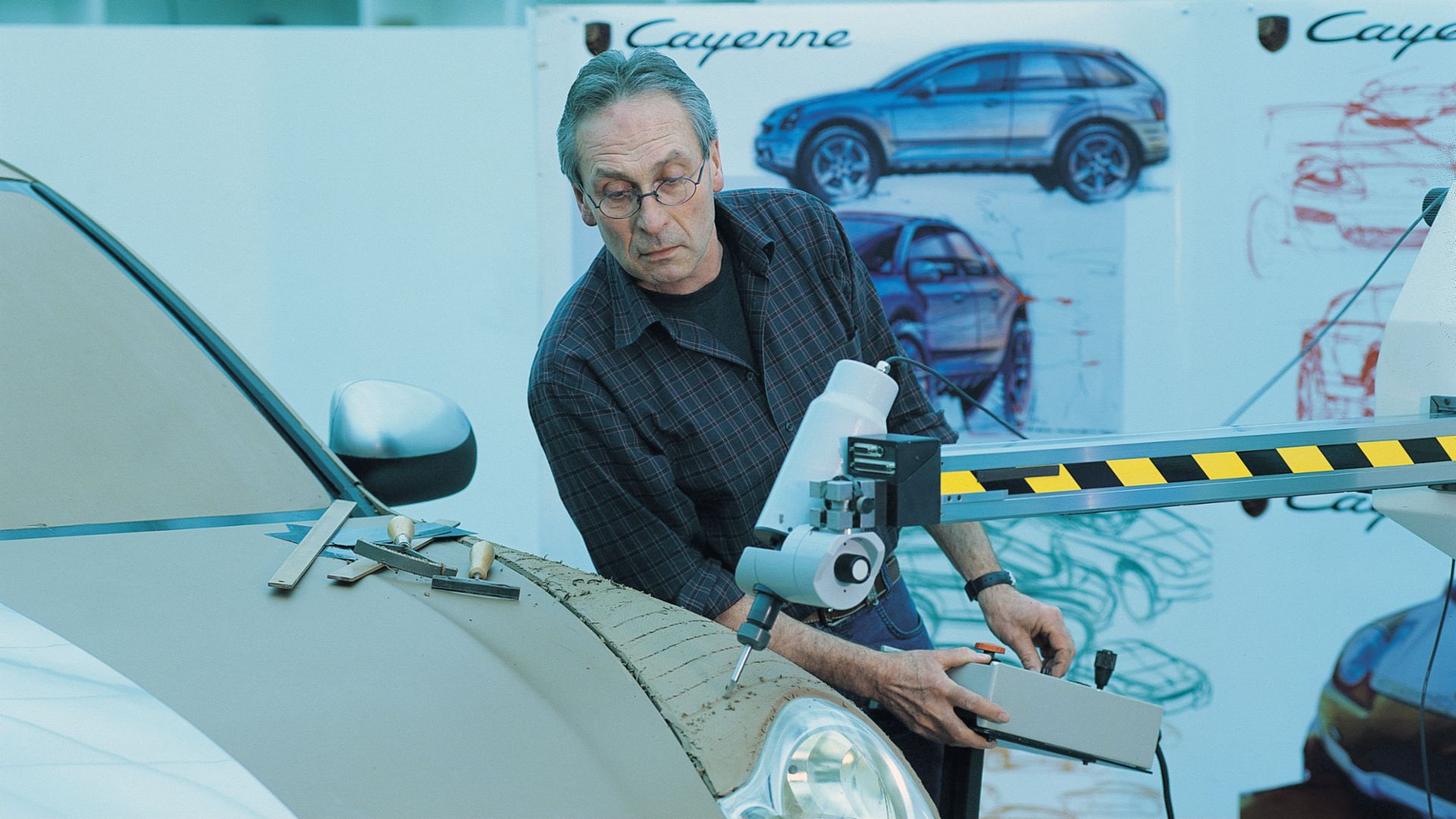
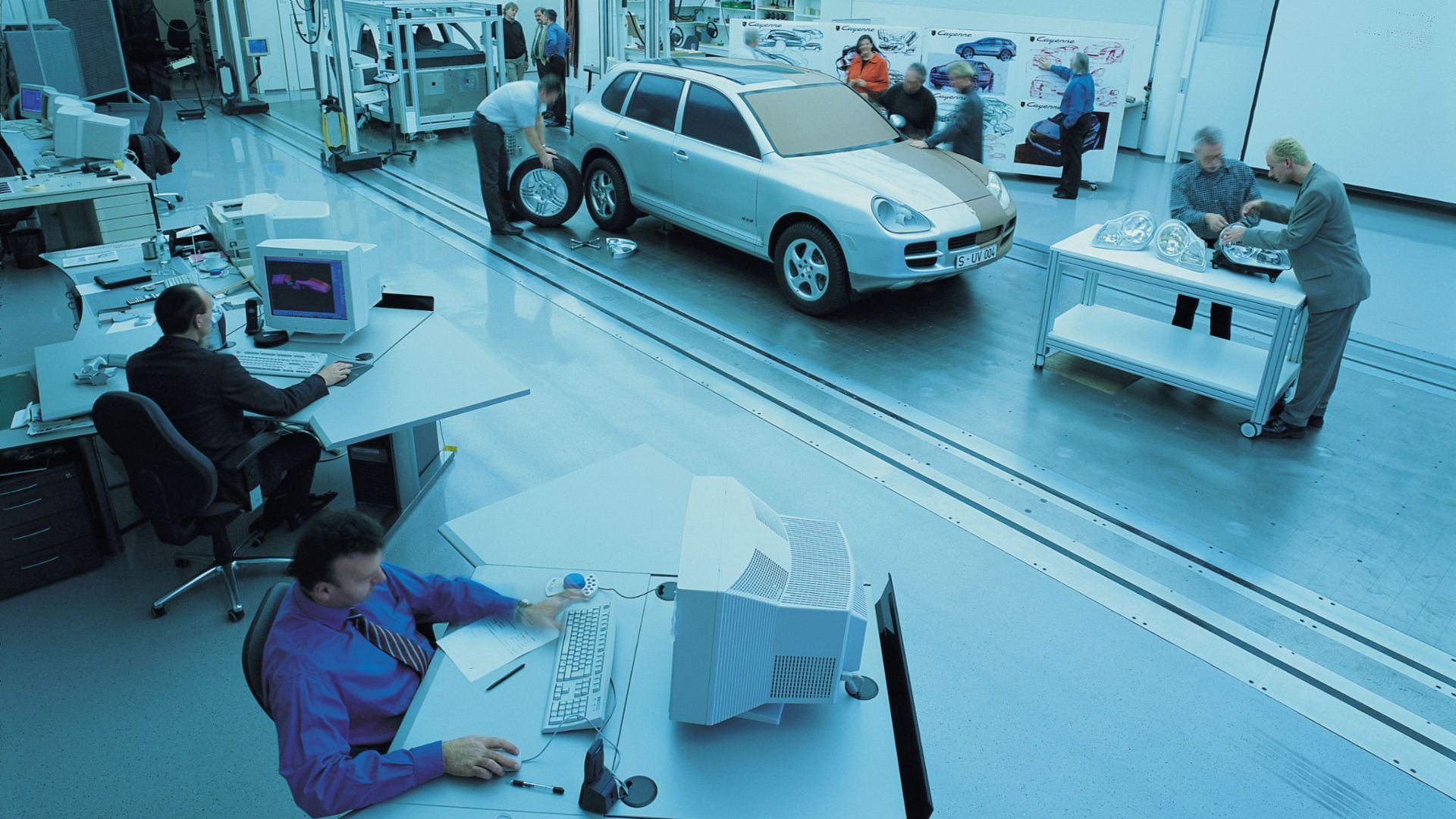
Design language that would become the Cayenne — shaped alongside the VW partnership, entirely on Porsche's own terms.
The development site itself, in a town called Hemmingen, was almost comically secretive. Inconspicuous. Surrounded by fences. Mirrored glass windows so nobody could see what was happening inside. Engineers built a multi-storey car park specifically so prototypes could come and go without being photographed by spies or journalists. One former Porsche vice president, reflecting on those years decades later, remembered driving prototypes in and out of the site completely unbothered — a level of secrecy that simply doesn't exist anymore in the era of smartphone cameras.
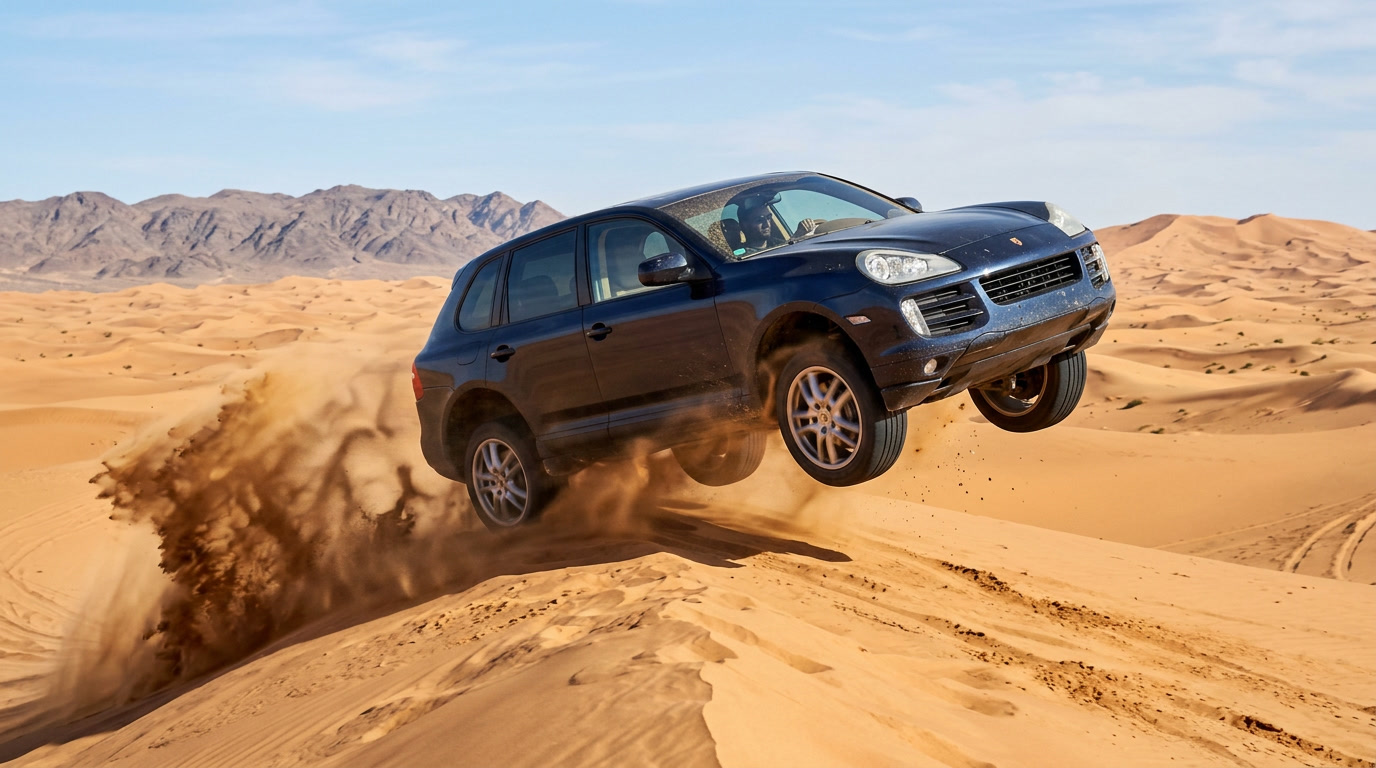
The endurance testing that followed took the prototype to genuine extremes — punishing dune runs in the sweltering heat of Dubai, brutal cold-weather testing in Canada — pushing this unproven Porsche-badged off-roader through conditions no 911 or Boxster would ever see.
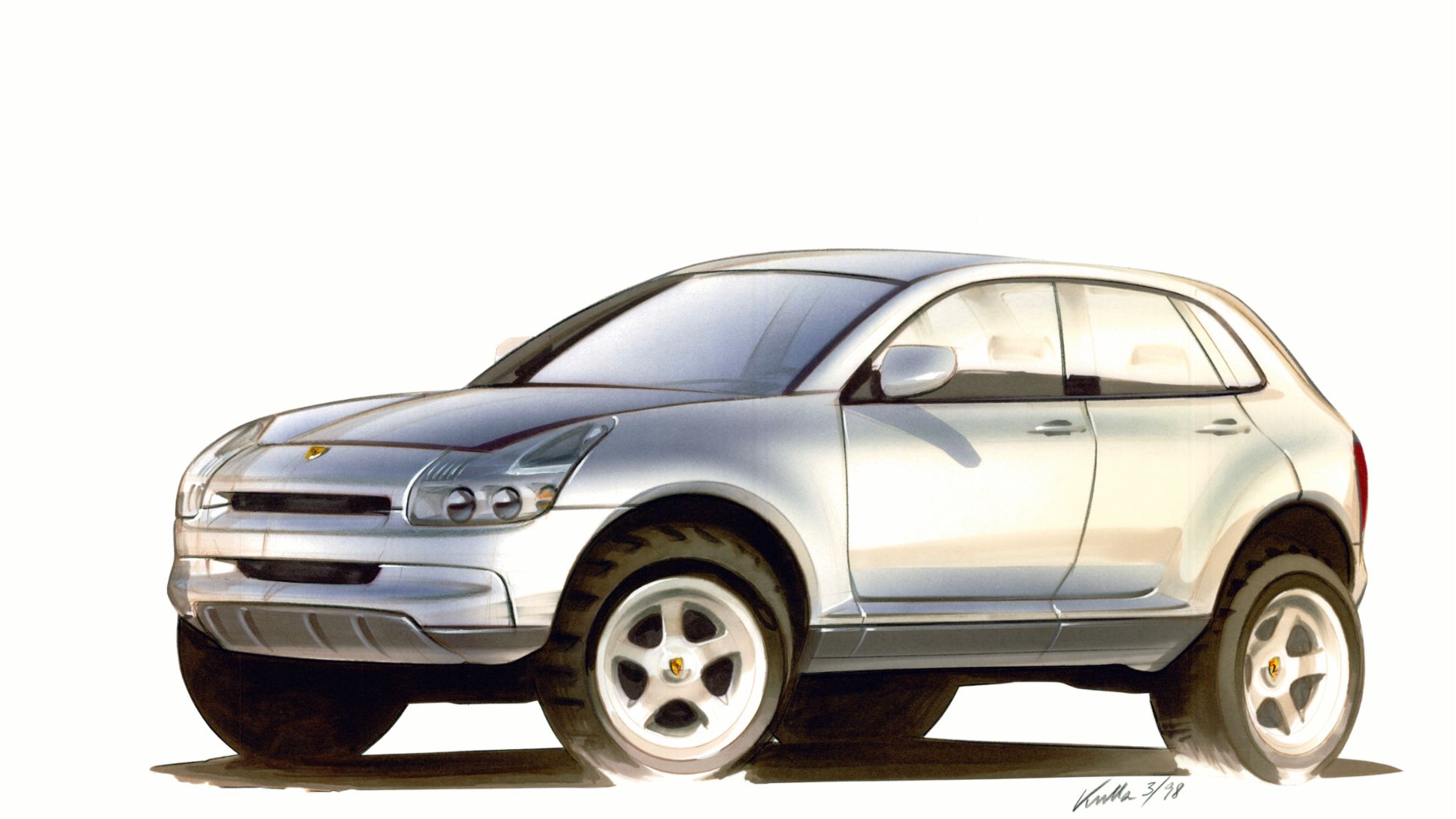
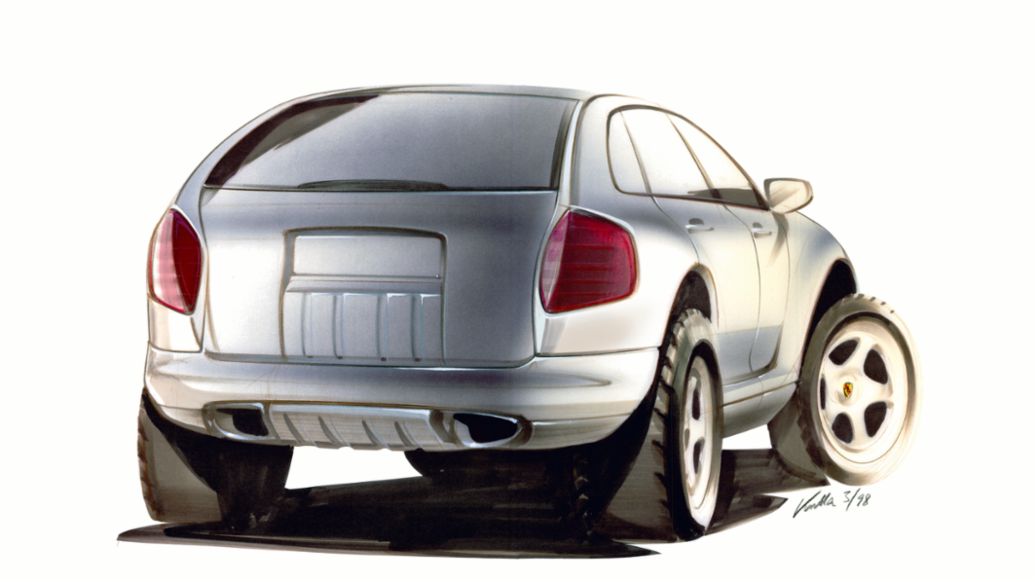
Early project Colorado sketch.
A decision that changed the map: built in Germany, not outsourced
There was one more decision buried in the Colorado project that mattered more than it seemed at the time. Porsche could have built the Cayenne anywhere — cheaper, faster, easier. Instead, in 1999, Zuffenhausen made the call to build it at home. A brand-new factory was constructed in Leipzig, officially opening in August 2002, the same year the Cayenne made its public debut.
But “built in Germany” wasn't quite the full story. The Cayenne's raw bodies — pressed, welded, and painted — were actually produced at Volkswagen's plant in Bratislava, Slovakia, the same facility building the Touareg from the shared platform. Only then were those painted Cayenne bodies shipped north into Saxony, to Leipzig, where Porsche's own workforce carried out final assembly — fitting the engine, the interior, the Porsche-specific chassis tuning that made it drive like a Porsche rather than a badge-engineered Touareg. It meant a Cayenne's shell crossed an international border before the car was even finished, built partly by Volkswagen hands and finished by Porsche's — a genuinely unusual arrangement between two companies that were, at that time, still fully independent of one another, sharing a platform simply to make an eye-watering development cost affordable for both. A quiet piece of logistics that most Cayenne owners today have no idea their car went through.
Same platform, two entirely different identities. The Cayenne and Touareg shared bones; everything else was built separately.
The gamble pays off — and silences the purists
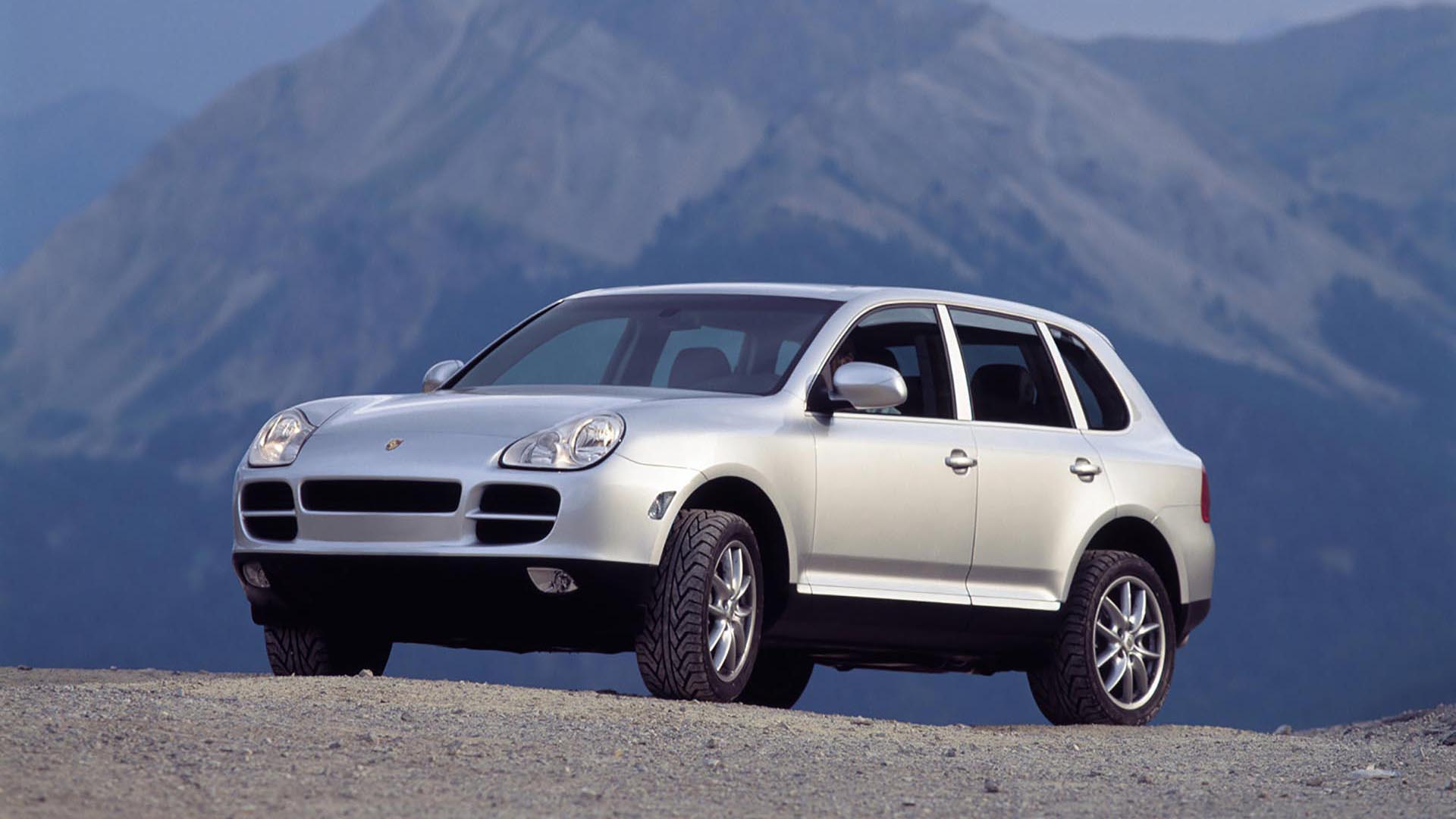
On August 21, 2002, the first production Cayenne rolled off the line in Leipzig. To Porsche purists, it was close to sacrilege — a company built entirely on the language of low-slung, rear-engined sports cars was now building a two-and-a-half-tonne family SUV. The styling, muscular and unapologetically bulky, split opinion immediately.
But Porsche's engineers had refused to simply badge-engineer a Touareg and call it done. The Cayenne S launched with a newly developed 4.5-litre V8 producing 340 horsepower; the Cayenne Turbo pushed that to 450 horsepower, hitting a top speed of 266 km/h — numbers that had no business coming out of something this size. Porsche Traction Management distributed power between the axles in a 62:38 rear-biased split, precisely so the Cayenne would still feel like it had come from Zuffenhausen the moment you turned the wheel.
The original Cayenne Turbo. 450 hp, 266 km/h top speed. Numbers nobody expected from an SUV in 2002.
The doubters went quiet fast. By 2003, demand had already blown past every internal projection. The Cayenne became Porsche's best-seller almost overnight — and the profits it generated didn't just save the company. They funded the future: the Panamera, and eventually, the Taycan. The car that purists called a betrayal ended up bankrolling everything that came after it.
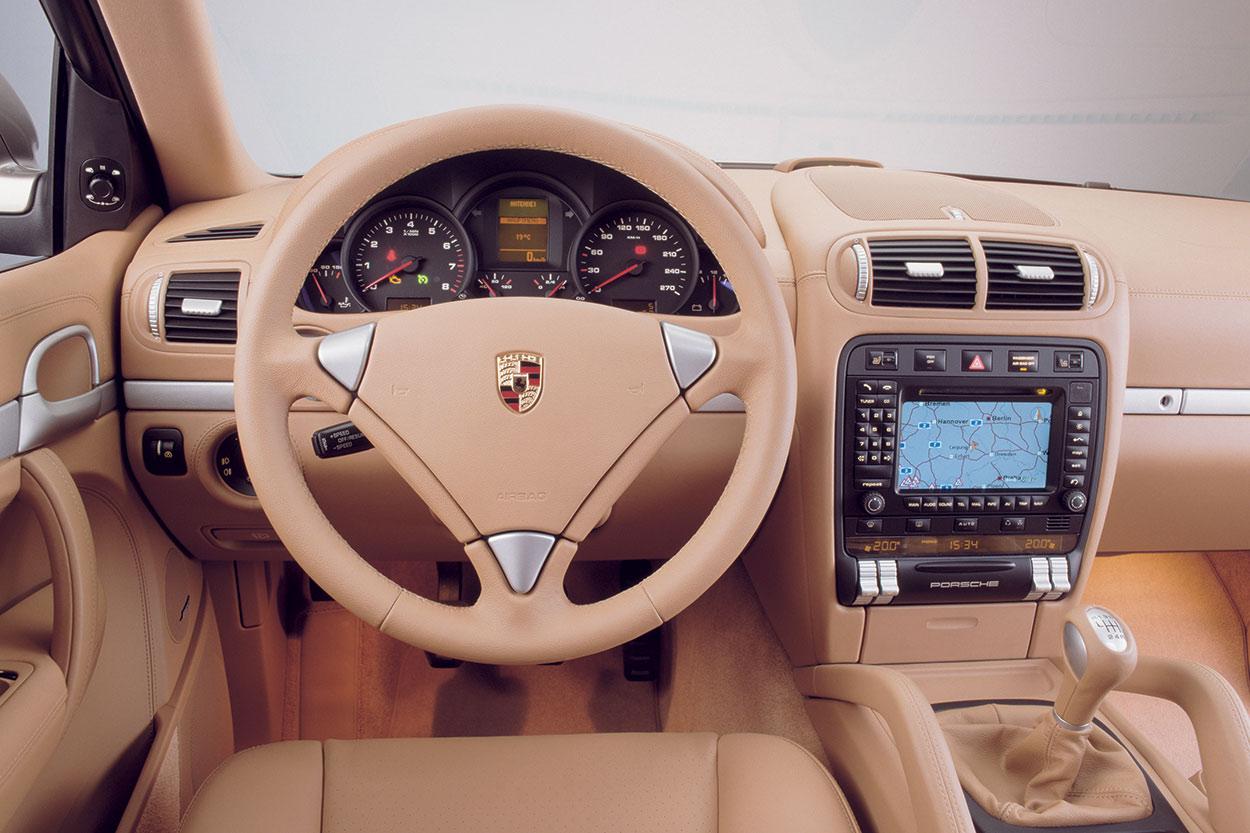
The first-generation Cayenne facelift — by this point, the SUV that was supposed to destroy Porsche's reputation had saved it.
The convertible that almost happened
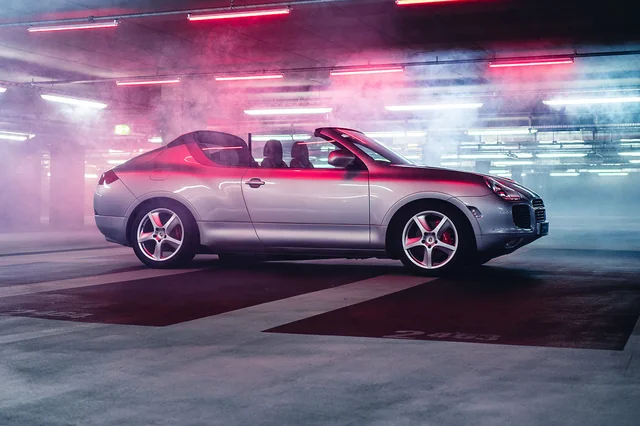
Just months after the original Cayenne launched, Porsche's designers were already testing how far the platform could stretch — sketching a coupé, a longer seven-seat version, and, strangest of all, a full convertible. The convertible went further than a sketch. Porsche actually built one: a 4.8-metre open-top Cayenne, still kept today at the Porsche Museum in Stuttgart, though never intended to be driven — it was purely an engineering test model, built to work out how the roof, seats, and rear end should look, with two different tail-light designs bolted onto the same car because the team hadn't settled on one yet.
The Cayenne convertible that never left Stuttgart — built as a test model, never as a production car.
The roof mechanism itself was oddly ahead of its time — a folding Z-pattern top swallowed into the boot lid, a design that would later resurface almost identically on the 911 Targa. But the convertible Cayenne never made it further than computer simulation. Porsche's own design chief, Michael Mauer, later put it plainly: “An SUV always has a large and heavy body. You combine this with a small top half and then cut off the roof — you get very strange shapes emerging from that.” The coupé idea from that same batch of sketches eventually became real in 2019. The convertible never did.
The quiet hybrid revolution nobody expected from an SUV
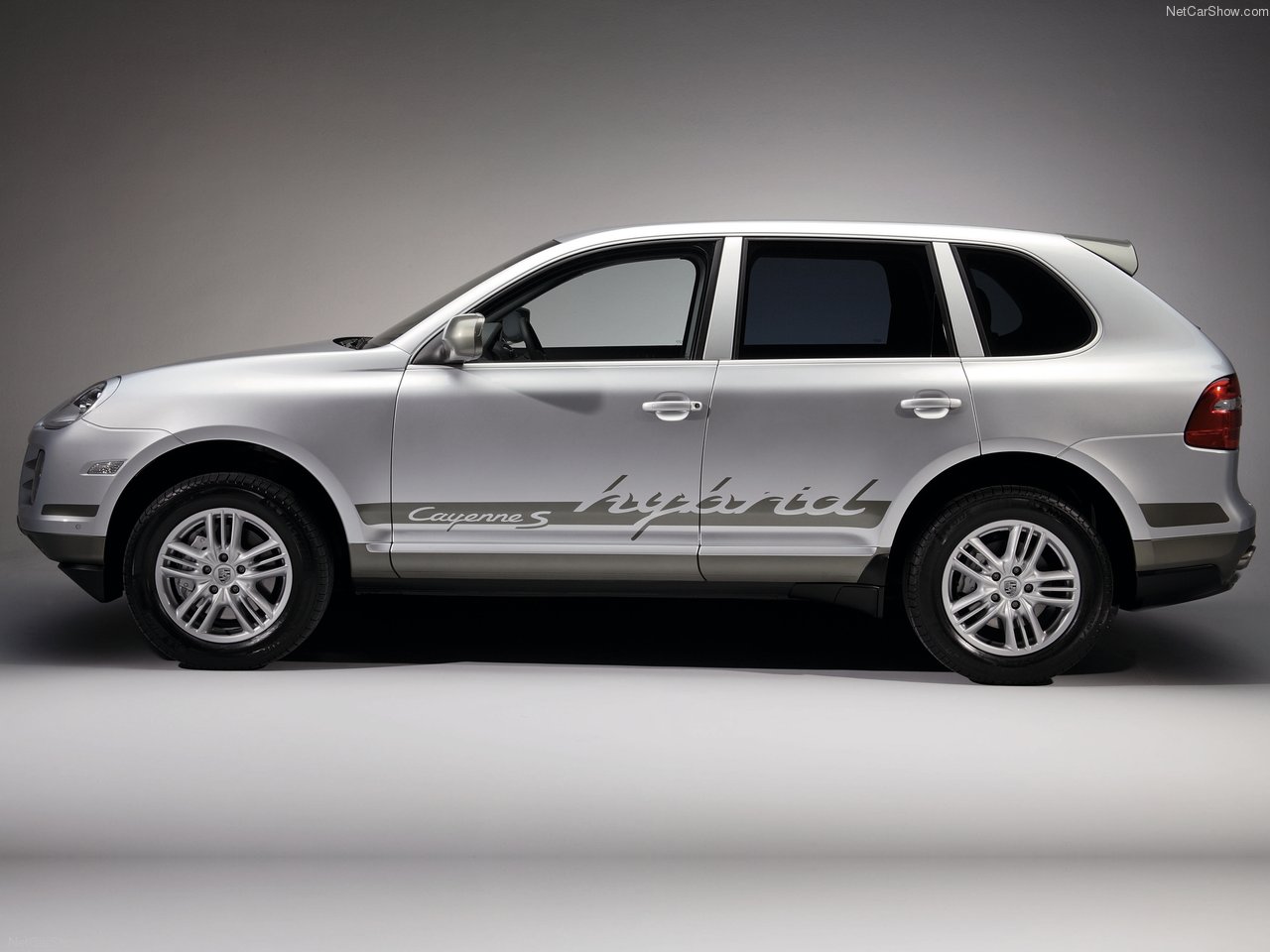
Here's where the Cayenne's story takes a genuinely surprising turn. In 2007, as part of a mid-cycle update to the first generation, Porsche unveiled a close-to-production concept: the Cayenne S Hybrid. And instead of copying the power-split hybrid systems most rivals were experimenting with, Porsche engineers went their own way — a parallel full hybrid, where the electric motor didn't just assist at low speeds, but could carry the car alone at speeds up to 120 km/h with the combustion engine switched off entirely.
That concept became real in 2010, with the second-generation Cayenne — Porsche's first-ever series-production hybrid. A 333 hp supercharged V6 paired with a 47 hp electric motor, working together for a combined 380 hp. The second generation also stripped weight by ditching the low-range transfer case in favour of a lighter, on-demand all-wheel-drive system — a piece of engineering philosophy still running through Cayennes built today.
The 2010 Cayenne S Hybrid — Porsche's first series-production hybrid, capable of running on electric power alone at up to 120 km/h.
A plug-in hybrid followed in 2014. By 2019, the range-topping model was the Cayenne Turbo S E-Hybrid. What started as a slightly awkward, unproven SUV in 2002 had quietly become one of the most important hybrid development platforms in Porsche's entire history — laying groundwork that would eventually feed into the Taycan.
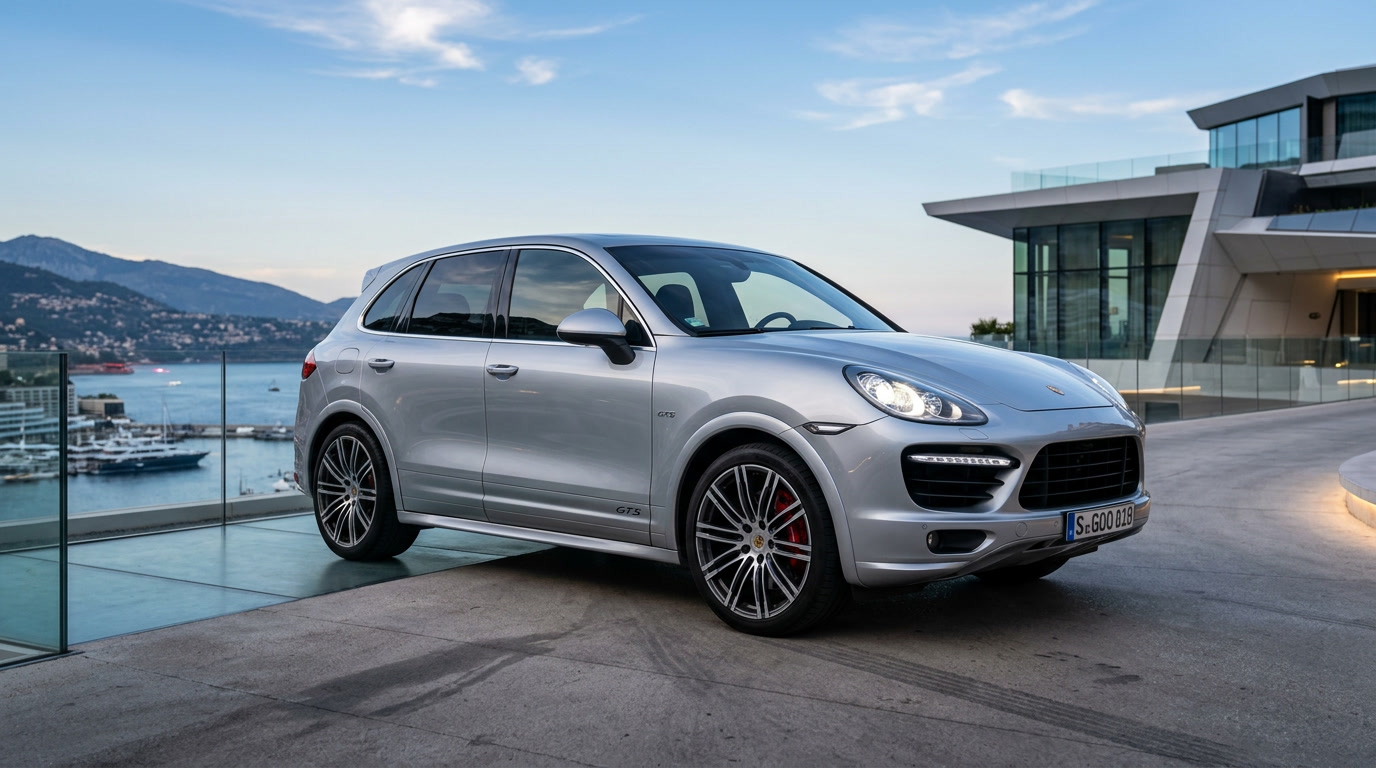
The second-generation Cayenne — lighter, more efficient.
The third-generation Cayenne.
One million Cayennes, and a lap record to prove the doubters wrong forever
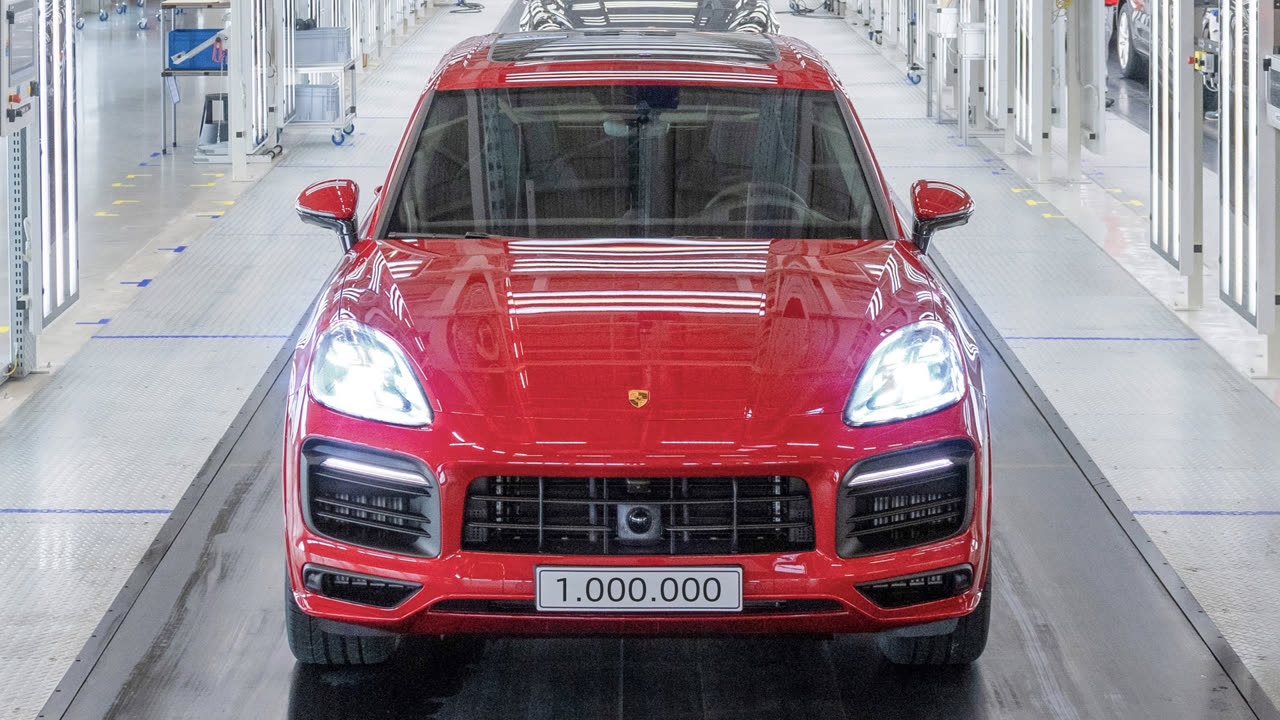
By 2020, the millionth Cayenne rolled off the production line in Bratislava — a GTS finished in Carmine Red, delivered to a customer in Germany. Eighteen years after Ferry Porsche's prediction, the numbers had made his case for him more emphatically than words ever could.
Cayenne #1,000,000: a GTS in Carmine Red, built in Bratislava and delivered in Germany in 2020.
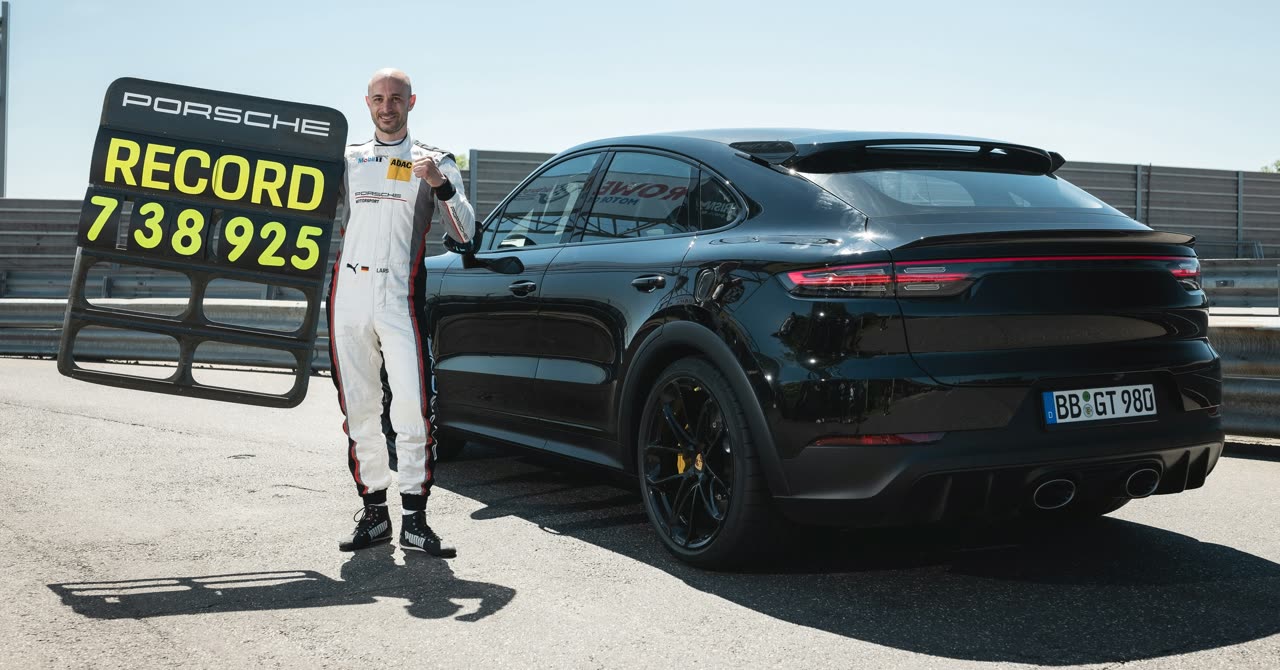
Then, in 2021, the third-generation Cayenne Turbo GT did something that would have seemed impossible to the purists of 2002: it set a Nürburgring lap record for production SUVs. The car that was once dismissed as un-Porsche-like was now embarrassing dedicated sports cars around the most demanding circuit in the world.
The Turbo GT at the Nürburgring — setting a production SUV lap record on the world's most demanding circuit.
2026: three powertrains, one badge, no goodbyes
Which brings the story to now. In 2026, more than two decades after that first Cayenne rolled off the Leipzig line, Porsche launched the Cayenne Electric — the first fully electric version of the model that saved the company. But this launch came with a decision that says almost as much about Porsche's thinking as the car itself: the electric Cayenne isn't replacing anything. It's joining the lineup.
Walk into a Porsche showroom in 2026 and you can order a Cayenne three different ways — combustion V8, plug-in hybrid, or fully electric — all sold side by side, all wearing the same name. Porsche has been explicit that the petrol and hybrid Cayennes aren't a dying breed being quietly phased out; the company has confirmed they'll continue “well into the next decade” running in parallel with the electric version. For a car this central to Porsche's finances, that's a notably patient, almost old-fashioned strategy in an industry where most manufacturers are racing to declare hard deadlines for combustion engines.
It's a choice that echoes the very first decision that created the Cayenne back in the 1990s — don't force a single answer on buyers who want different things from the same badge. Then, it was sports car versus SUV. Now, it's combustion versus electric. Same instinct, three decades apart.
The numbers on the electric version, regardless, are difficult to process against where this story began. Built on an all-new 800-volt architecture with a 113 kWh battery, the entry Cayenne Electric produces 435 horsepower with launch control and hits 60 mph in 4.5 seconds. At the top of the range, the Cayenne Turbo Electric produces up to 1,139 horsepower and 1,106 lb-ft of torque, launching to 60 mph in just 2.4 seconds — officially making it the single most powerful production Porsche ever built. Not the most powerful SUV. The most powerful Porsche, full stop, more powerful than any 911 that has ever carried the badge.
It charges at up to 400 kW on its 800-volt system, taking a battery from 10 to 80 percent in around 16 minutes, and it's the first Porsche to offer optional wireless inductive charging — park over a pad at home and it simply charges, no cable required. Depending on trim, it can tow up to 7,716 lbs, meaning the electric Cayenne can still pull a horse trailer or a boat just as confidently as the V8 versions parked next to it in the showroom.
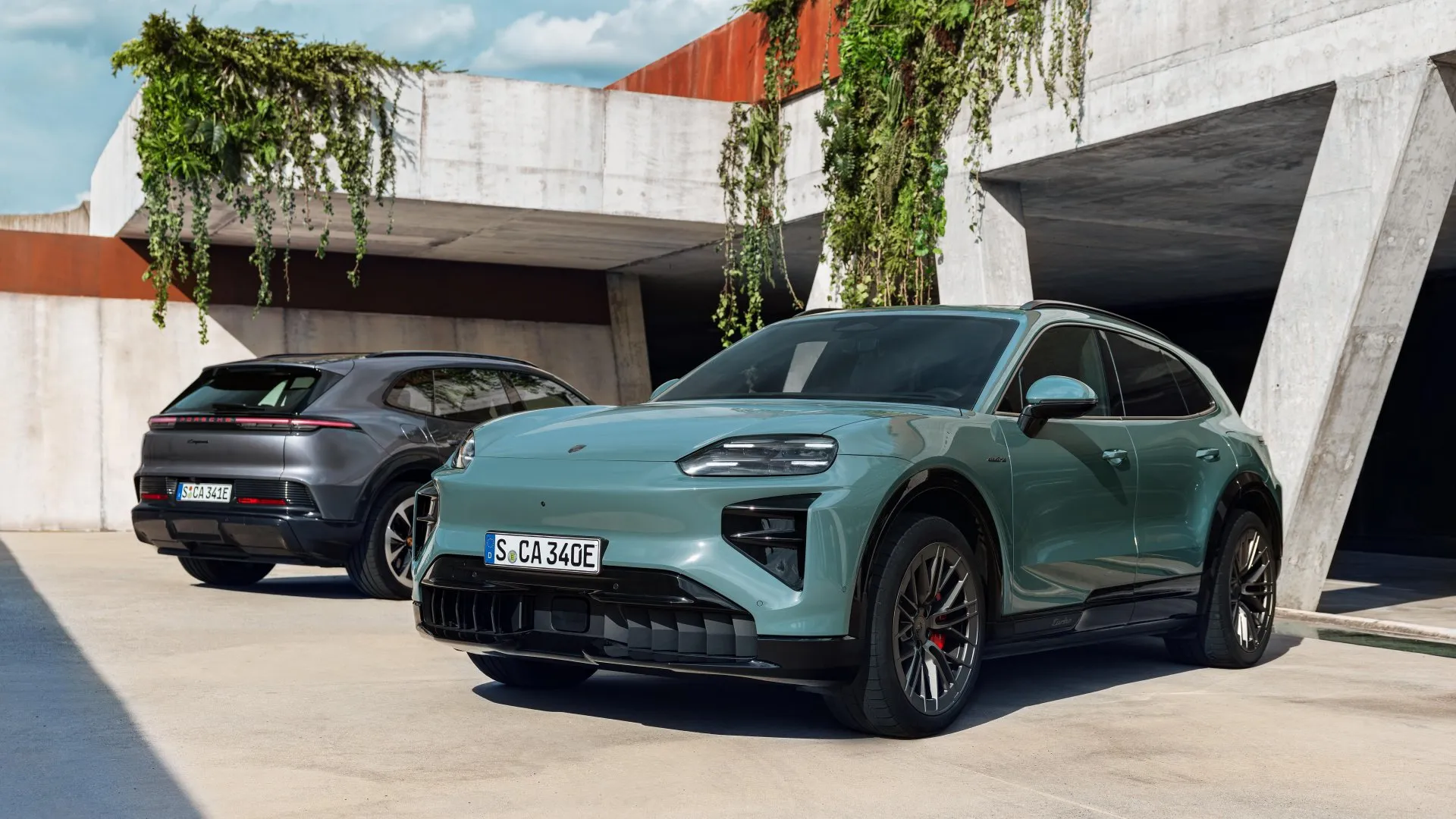
The 2026 Cayenne Electric. Up to 1,139 hp, 400 kW charging, and the first Porsche with wireless inductive charging.
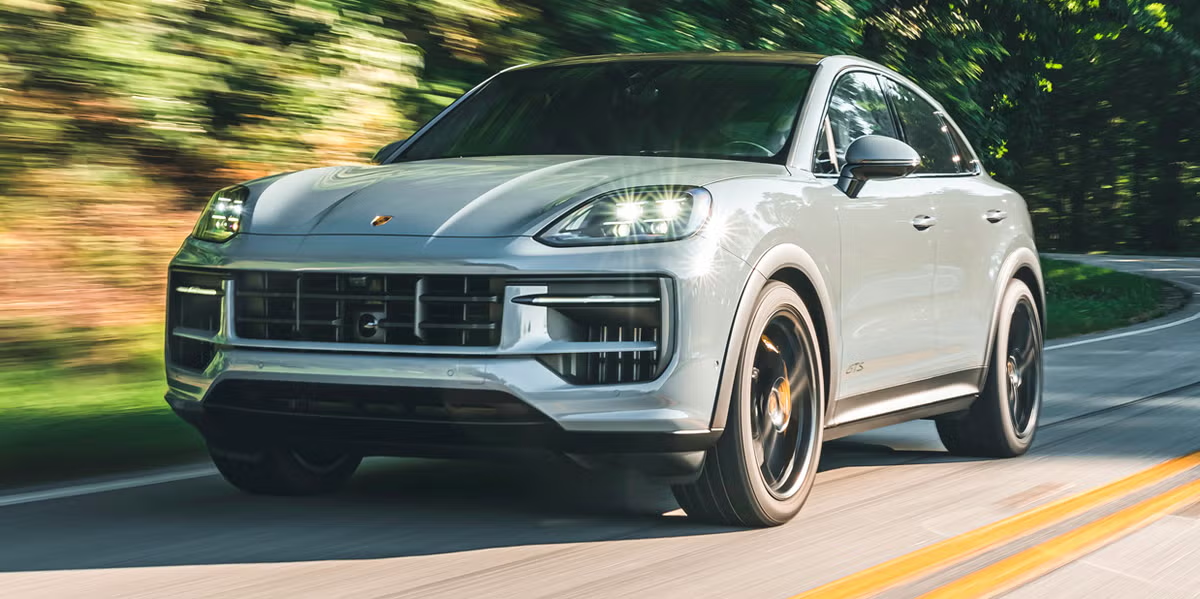
The 2026 Cayenne Turbo GT — sold alongside the electric version, not replaced by it.
The lesson underneath the story
What makes the Cayenne genuinely remarkable isn't the horsepower figures or the Nürburgring record, impressive as they are. It's the fact that a financially desperate sports car company took the single riskiest bet in its history — building an SUV, in secret, in partnership with a rival, on a platform nobody was sure the Porsche faithful would ever accept — and that bet didn't just work. It became the financial foundation that every Porsche built since has stood on.
Ferry Porsche said it plainly back in 1989, before the crisis, before Project Colorado, before Hemmingen's fences went up: build it to Porsche's standard, put the crest on the front, and people will buy it. More than three decades and over a million cars later, he still hasn't been proven wrong.
Three decades after a prediction that nobody believed, the Cayenne is still making the case for itself.
Know exactly what you're buying.
Whether it's a first-gen Turbo or the latest Electric, autOracle tells you exactly what to check and what to expect.
Join autOracle waitlistSources
- Porsche Newsroom, “The ‘third Porsche’ – an extraordinary success story” — newsroom.porsche.com
- Porsche Newsroom, “The Cayenne journey – courage, secrets and world records” — newsroom.porsche.com
- Porsche Riverside, “History of the Porsche Cayenne” — porscheriverside.com
- Just 4x4s, “Feature — Porsche Cayenne History” — just4x4s.com.au
- This Day In Automotive History, “August 21, 2002: The Controversial Porsche Cayenne Begins Production” — automotivehistory.org
- Porsche Newsroom, “New 2026 Porsche Cayenne Coupe Electric” and “Porsche expands all-electric SUV model lineup with the Cayenne S” — newsroom.porsche.com
- Autoblog, “2026 Porsche Cayenne Electric Review, Specs, Pricing, and Warranty” — autoblog.com
- CarBuzz, “2026 Porsche Cayenne Electric Pricing, Photos & Specs” — carbuzz.com
- MotorWeek, “2026 Porsche Cayenne Electric | First Drive” — motorweek.org
- Wikipedia, “Volkswagen Touareg” — en.wikipedia.org
- Netcarshow, “Porsche Cayenne Convertible Concept (2002)” — netcarshow.com
- InsideHook, “Fun Fact: Porsche Considered Making a Cayenne Convertible in 2002” — insidehook.com
- Uncrate, “Porsche Cayenne Cabriolet 2002” — uncrate.com
- StuttCars, “Porsche Cayenne Cabriolet Concept Car (2002)” — stuttcars.com