Jul 1, 2026Advice
Back to blogAdvice
Why UK Car Insurance Premiums Vary So Wildly for the Same Car
The autOracle Team
Jul 2, 2026
Two neighbours, identical cars, same road. One might pay several hundred pounds a year for insurance, the other several thousand. This isn't an insurer error — it's how UK motor insurance pricing works, and understanding the mechanics behind it is the difference between accepting a renewal quote and genuinely bringing your premium down.
A note on the numbers below: the mechanics described here — how insurance groups work, how no claims bonus accumulates, how telematics pricing operates — are well-established and stable features of the UK insurance market. The specific figures are drawn from insurance comparison sites and brokers reporting on 2026 market data. These outlets have a natural interest in making comparison-shopping and telematics look as beneficial as possible, and the underlying methodology isn't something we've independently verified. Treat the figures as a general indication of scale rather than a guarantee of what you'll personally see — always get your own quotes.
The insurance group is baked into the car before you ever get a quote
Every car sold in the UK is assigned an insurance group, on a scale that broadly runs from 1 to 50, by the Group Rating Panel — a body run jointly by the Association of British Insurers (ABI) and the Lloyds Market Association. This number, set before the car ever reaches a driveway, is arguably the biggest factor within your control, because unlike your age or postcode, it's a decision you make at the point of purchase.
The panel scores every car on parts and repair cost, typical repair time, the car's value, its performance, and its safety and security features. The gap in annual premium between a low-group city car and a high-group hot hatch can be substantial — reportedly running into thousands of pounds for the same driver, though the exact gap varies by insurer and individual circumstances.
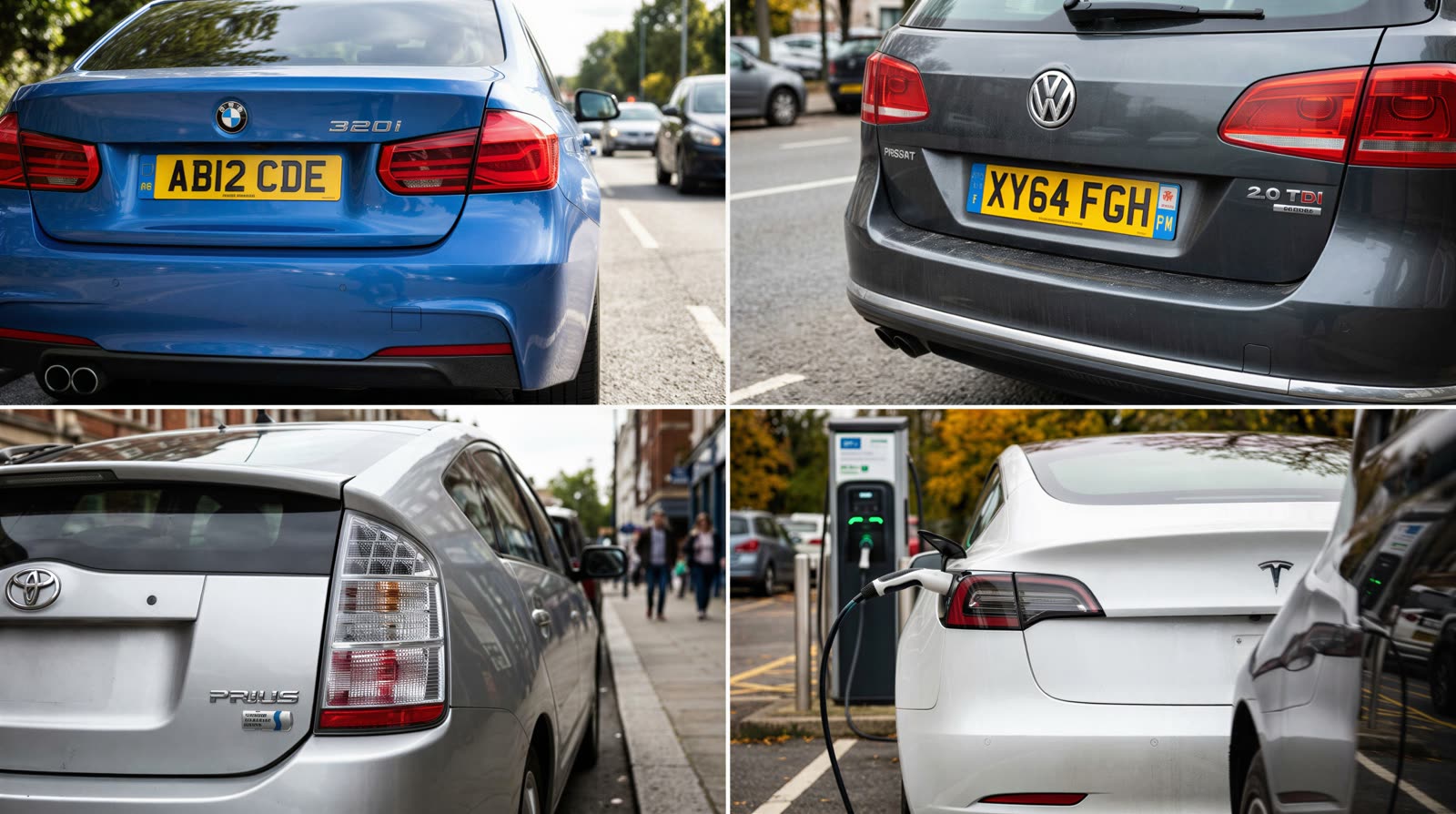
There's a trap worth flagging regardless of exact figures: an older, premium-badged car can look deceptively affordable to buy while sitting in a surprisingly high insurance group. An older BMW 3 Series, Audi A3, or Mercedes C-Class commonly sits well up the group scale, which can mean the insurance cost outweighs any running-cost advantage the badge might otherwise offer — a directionally reliable pattern worth checking before you buy, even if the precise premium difference varies.
Your postcode is doing more work than you'd think
Insurers price partly by area, and urban postcodes — parts of London, Birmingham, and Manchester are commonly cited — tend to cost more, reflecting higher reported theft and accident rates in those areas. Some sources suggest the gap between London and lower-cost regions like the South West can be very large for younger drivers specifically, though exact multiples vary by source and shouldn't be taken as a fixed rule.
This is one of the few major pricing factors you genuinely cannot change without moving house, which is exactly why comparing quotes across multiple insurers matters — different insurers weight postcode risk differently, so the “expensive area penalty” isn't necessarily identical everywhere you shop.
No claims bonus is the single most powerful lever you build over time
A no claims discount rewards every year you drive without making a claim, and the discount compounds meaningfully over several years — multiple UK insurance sources describe long-term claims-free records (5+ years, and especially 9+ years) as capable of reducing premiums very substantially. The exact percentage varies by insurer and isn't something we'd present as a fixed number, but the direction and general scale of the effect is consistent and well understood across the industry.
This mechanism is also the main reason “fronting” — declaring a parent or more experienced driver as the main driver when a younger person actually drives the car most — is treated so seriously. It's insurance fraud under UK law, not a grey area, and if discovered, the policy is cancelled, claims go unpaid, and prosecution is possible.
Telematics: the technology that's changed pricing for many new drivers
Black box, or telematics, insurance has moved from a niche product to a genuinely mainstream recommendation for new UK drivers. Rather than pricing purely on demographic risk factors — age, postcode, car — it fits a device or app that tracks actual driving: speed, braking, cornering, acceleration, and time of day.
Multiple industry sources report that a large majority of the youngest drivers find telematics to be their cheapest option, with reported savings running into the low thousands of pounds compared to standard policies. Treat the precise percentages as indicative rather than something you should expect to replicate exactly — your own quote will depend on your specific insurer, car, and driving record.
What's more reliably true across sources is the mechanism itself: telematics is a two-stage process. Your starting quote uses broadly the same demographic factors as any policy — the technology doesn't change day-one pricing. What it changes is what happens at renewal, after 12 months of real driving data. Safe, low-mileage, daytime drivers tend to see meaningful reductions at that point; the saving is earned over time rather than instant.
Telematics doesn't suit everyone equally. It tends to work best for low-mileage, daytime drivers confident in their own habits. It suits people with long, stop-start commutes, frequent late-night driving for work, or a strong preference for privacy considerably less well — some policies specifically apply higher charges for driving during late-night hours.
The levers you can actually pull right now
These are standard, well-established mechanics across the UK insurance market, even where exact percentage savings vary by insurer and circumstance:
Voluntary excess
Increasing it typically reduces your premium — but only take this on if you could comfortably afford to pay it out if you actually needed to claim.
Where you park
A locked garage is generally cheapest, a private driveway next, on-street parking most expensive — insurers price theft and vandalism risk into this directly.
Paying annually rather than monthly
Monthly payments function essentially as a loan from the insurer with interest built in, so paying annually is typically the cheaper route overall.
Adding an experienced named driver
This can lower the premium by shifting the insurer's view of overall risk on the policy — but only legitimately where that person genuinely does drive the car occasionally.
Never auto-renewing
This is the single most consistently repeated piece of advice across every UK insurance source. A strong telematics score or years of no-claims bonus doesn't automatically mean your current insurer's renewal offer is competitive — comparing quotes at every single renewal routinely uncovers cheaper alternatives elsewhere.
Why premiums are elevated across the board right now
Even with every personal factor optimised, industry reporting suggests 2026 is a genuinely expensive year for UK motor insurance broadly — driven by rising claims payouts, increasing repair costs linked to more complex vehicle technology, rising vehicle theft, and higher costs for parts and materials. This is market-wide pressure that sits on top of, and somewhat independent of, your personal risk factors.
The EV insurance premium — a cost that catches new electric car owners out
One pattern that does appear consistently across sources, even if exact percentages vary: EVs are currently more expensive to insure than comparable petrol cars, often cited in the region of a 20–25% premium. This isn't really about the car being electric per se — it's driven by higher repair costs for battery packs and specialist components, and a still-developing pool of technicians qualified to work on EV-specific systems. Insurance groups for EVs also tend to sit higher than equivalent petrol models for the same underlying reason. This gap is widely expected to narrow as the EV repair network matures, but it's a real cost worth factoring into any EV running-cost comparison rather than an afterthought.
The bottom line
Two identical cars on the same street genuinely can cost very different amounts to insure, and almost none of that gap is arbitrary — it's the accumulated effect of insurance group, postcode, no-claims history, and whether telematics data exists to prove low risk beyond raw demographics. The factors you can't change much (postcode) matter less over time than the factors you can build deliberately — a claims-free record, a sensible insurance group at point of purchase, and comparing quotes at every renewal rather than accepting whatever number arrives in the post. For exact figures relevant to you, always get personalised quotes rather than relying on any published averages, including the ones referenced here.
Understanding your car's real condition and history — the kind of detail autOracle surfaces from its full DVSA record — is also worth having on hand at renewal time, since a documented, well-maintained car is a stronger position to negotiate from than an unknown one.
Know exactly what's wrong with your car.
Describe your symptoms in plain English and get an instant diagnosis.
Join autOracle waitlistSources
Reporting on 2026 UK insurance market trends — treat as illustrative secondary sources rather than primary verified data. For authoritative figures, consult the ABI directly.
- Brumble, “Black Box Car Insurance: How Telematics Works and Is It Worth It? (2026)” — brumble.co.uk
- Carsa, “Cheapest Cars to Insure for New Drivers UK 2026” — carsa.co.uk
- Zego, “How much does telematics car insurance cost? 2026” — zego.com
- WeCovr, “UK Telematics Insurance 2026” and “Black Box Insurance Savings UK 2026” — wecovr.com
- Brumble, “Will Car Insurance Get Cheaper in 2026? UK Premiums, EV Costs & Key Trends” — brumble.co.uk
- Brumble, “Young Drivers Car Insurance UK: How to Get Cheaper Cover in 2026” — brumble.co.uk
- Brumble, “Compare Black Box Car Insurance | Telematics Quotes UK” — brumble.co.uk
- Kael Tripton, “Black Box Car Insurance UK 2026 | How Telematics Works” — kaeltripton.com
- CarCostCheck, “Cheapest Cars to Insure in the UK (2026): Complete Guide” — carcostcheck.co.uk
- Association of British Insurers (ABI) — for primary/authoritative data, consult directly at abi.org.uk