Diesel vs Petrol vs Hybrid vs EV: What Actually Makes Sense for UK Drivers in 2026
The autOracle Team
Jul 1, 2026
Every “which fuel type is cheapest” article gives you one answer. The honest truth is there isn't one — the right choice depends entirely on how many miles you drive, whether you can charge at home, and how long you keep the car. Here's the real breakdown, by driving pattern, using current 2026 UK figures.
The per-mile fuel cost, stripped back
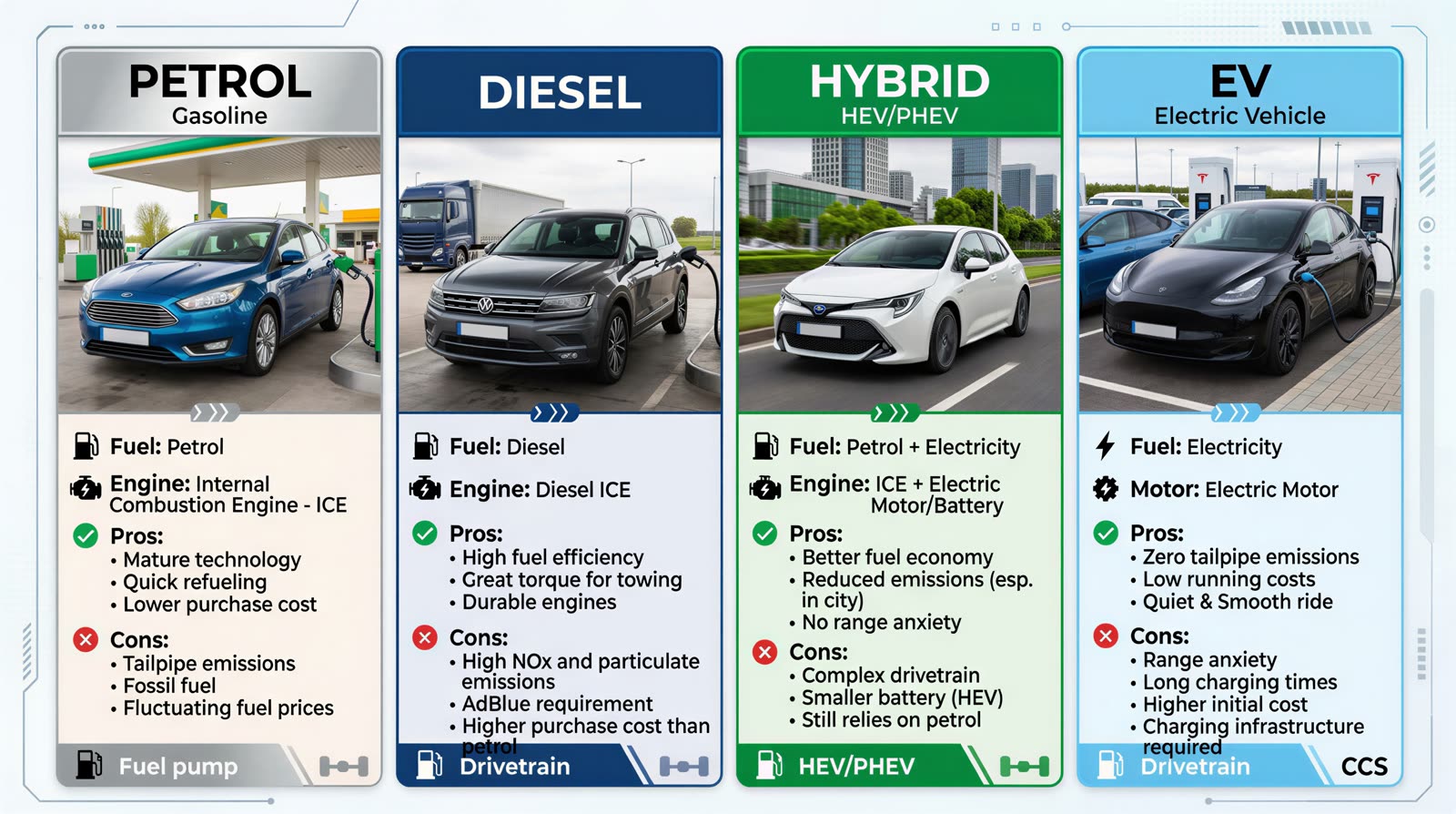
At today's prices, the raw cost per mile looks like this: petrol costs roughly 18p per mile in fuel alone, diesel around 16.8p per mile, hybrid around 13.1p per mile, and a fully electric car charged at home on a standard tariff costs just 7p per mile — dropping to as little as 2–3p per mile on a cheap off-peak EV tariff. On paper, electric wins decisively. In practice, several other costs change that picture depending on your situation.
Why home charging is the single biggest variable
This is the detail that gets buried in most comparisons but decides almost everything: an EV's running-cost advantage depends almost entirely on whether you can charge it at home. A home charge on a standard tariff costs around £14.40 for a full 60kWh battery; on a cheap off-peak EV tariff that drops to roughly £4.20. Public rapid charging, by contrast, is a different story entirely — it's usually far more expensive than home charging, and can push EV running costs close to, or even above, petrol once you factor in the price per kWh at a motorway service station.
If you don't have a driveway or off-street parking, the maths shifts substantially, and petrol becomes the more predictable, and often cheaper, option overall. This single factor — driveway or no driveway — matters more to your actual running costs than almost anything else in this comparison.
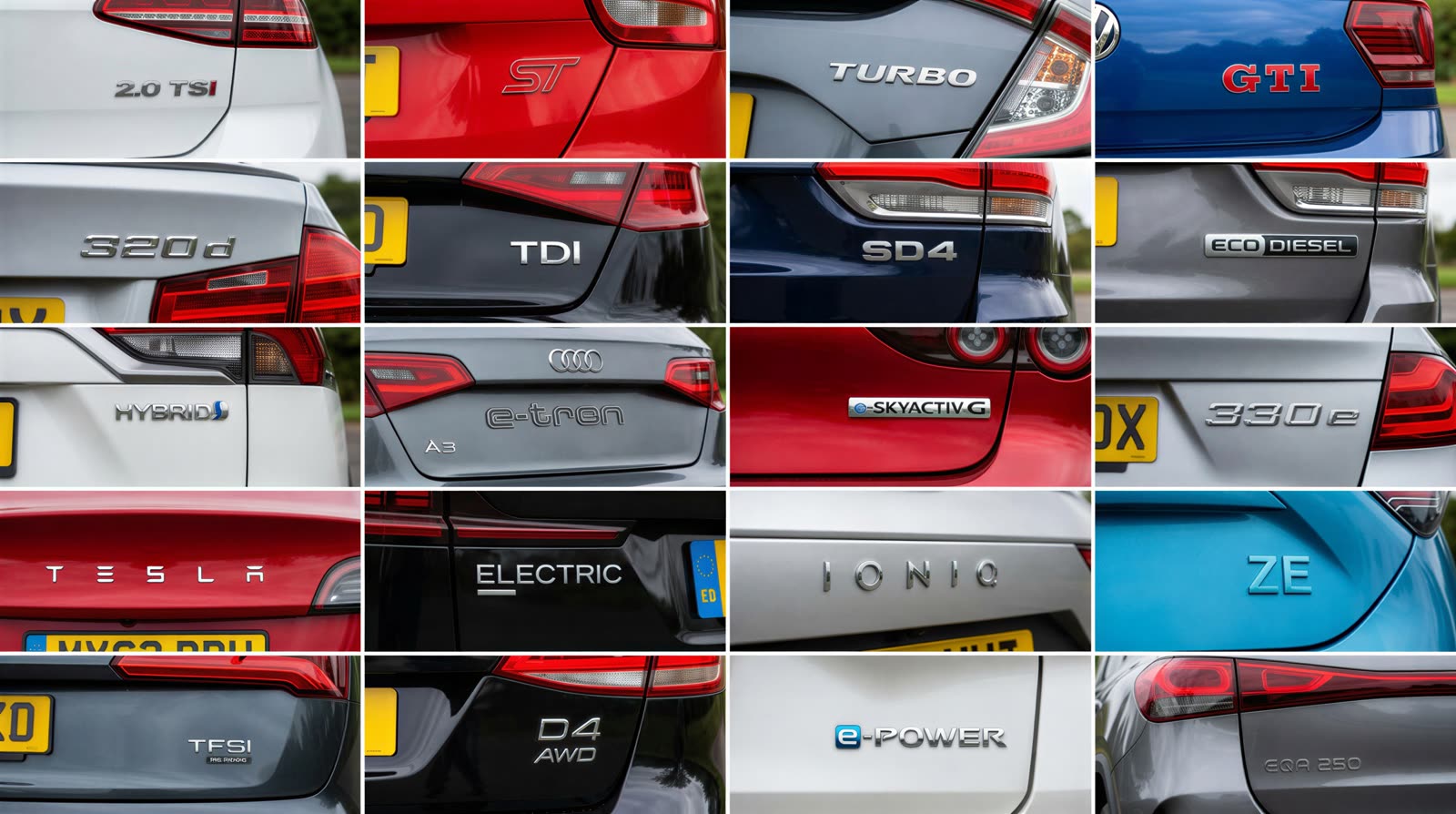
By annual mileage: what actually saves you money
Under 5,000 miles a year
At very low mileage, the fuel savings from any alternative to petrol are modest, and for EVs specifically, the higher purchase price takes considerably longer to earn back. Petrol remains the sensible default here — lower upfront cost, no charging infrastructure needed, and the fuel savings from switching simply don't add up quickly enough to justify the price premium.
5,000–10,000 miles a year (the average UK driver)
This is where the picture gets genuinely interesting. At 10,000 miles a year, EVs save around £546 per year in running costs compared with a modern diesel — and considerably more against petrol, since diesel is inherently more fuel-efficient than petrol to begin with. If you have home charging, this is the mileage band where electric starts to make clear financial sense over the life of the car. Hybrids sit as a genuinely solid middle ground here too — no charging infrastructure required, meaningfully better fuel economy than pure petrol, and none of the range or charging-access anxiety that comes with a full EV.
10,000–15,000 miles a year
The EV advantage grows here — savings against diesel rise to around £667 per year at 15,000 miles with predominantly home charging. This is genuinely the sweet spot for electric vehicles among UK drivers: high enough mileage that the per-mile savings compound meaningfully, but not so high that public charging becomes unavoidable on a regular basis.
20,000+ miles a year
This is the one scenario where diesel still holds a real, if narrowing, advantage — specifically for high-mileage motorway drivers without reliable home charging access. Diesel engines remain highly efficient over long distances, and for drivers regularly covering motorway miles without the ability to charge overnight, diesel can still be competitive on long routes where public charging adds both cost and time. That said, high-mileage drivers who do have home charging see the fastest EV break-even of any group — typically 5–7 years at 15,000 miles a year — because the per-mile savings compound fastest when you're covering the most distance.
The one factor that changes everything for diesel: how you actually drive it
This is the detail almost every running-cost comparison leaves out entirely, and it's arguably more important than the fuel price. Diesel engines are designed for sustained loads and long, steady journeys. Millions are instead used for school runs, quick errands, and stop-start city traffic — and that mismatch is expensive.
Short trips prevent the engine from reaching its optimal thermal range, and modern diesels specifically need their exhaust to reach around 800°C for the Diesel Particulate Filter (DPF) to properly self-clean through a process called regeneration. Frequent short journeys under 30 minutes simply never get hot enough for this to happen. The soot the DPF is designed to trap keeps building instead of burning off, and the consequences cascade through the engine in a well-documented chain reaction: as the DPF blocks, exhaust back-pressure rises, which stresses the turbocharger and forces the ECU to repeatedly attempt regeneration by injecting extra fuel — damaging injector tips, diluting the engine oil with unburned fuel, and causing even more soot, which blocks the DPF further. Mechanics describe it plainly: a blocked DPF stresses the injectors, the injectors produce more soot, the DPF blocks faster, and the cycle repeats.
The costs at each stage of that chain, at current UK prices:
| Repair | UK Cost |
|---|---|
| Forced DPF regeneration (caught early) | £100–£150 |
| Professional DPF cleaning | £150–£400 |
| DPF replacement | £1,000–£2,500+ |
| Turbo or injector damage from ignored DPF warnings | £1,000–£2,500+ |
| Full injector set replacement | Often £2,000+ |
The pattern in every UK garage's experience is identical: catch it early and you spend £100–£150 on a forced regeneration; ignore the warning light and you're looking at £1,000–£2,500+ for turbo or injector damage. One specialist's advice on this is blunt and worth taking seriously: if you do mostly short journeys, a modern diesel isn't the right choice, no matter how well you maintain it.
If you do buy or already own a diesel and your driving is mostly urban, the practical mitigation is a weekly 30–40 minute drive at a steady motorway speed, specifically to let the DPF regenerate properly — not optional advice, but the single most effective thing you can do to avoid the repair bills above.
The costs beyond fuel that change the answer
Servicing and maintenance. EVs have fewer moving parts — no oil changes, no exhaust system, no timing belt or chain, no clutch — and this shows up directly in the bills. EV servicing typically costs 20–40% less than a comparable petrol or diesel car, averaging around £165–£400 annually versus £600–£700 for a well-maintained diesel.
Insurance. This is where the EV advantage reverses. Comprehensive insurance for electric cars typically costs more than an equivalent diesel or petrol car — often 20–50% above comparable combustion models — driven by higher repair costs for battery packs and electric motors, a smaller pool of specialist EV technicians, and less historical claims data for insurers to price against. This gap is expected to narrow as the EV repair network matures, but it's a real cost working against the fuel savings today.
Road tax (VED). The playing field has levelled significantly here. From April 2025, EVs lost their previous free road tax status and now pay the same standard rate as petrol and diesel cars — £200 per year following the April 2026 increase for most cars registered after April 2017. The one remaining EV advantage is a lower first-year rate of just £10, and cars registered before April 2025 remain fully exempt.
Tyres. A cost that catches many EV owners out. Electric cars are heavier than petrol equivalents due to battery weight, and deliver instant torque — both of which accelerate tyre wear. Budget for replacement every 15,000–25,000 miles rather than the 20,000–40,000 miles typical of a petrol car, adding roughly £200–£400 a year to EV running costs that petrol and diesel drivers don't face to the same degree.
Depreciation. Often left out of running-cost comparisons entirely, but it's frequently the single largest cost of car ownership — the average new car loses around 60% of its value in the first three years. For EVs bought outright, this remains a genuine risk, though the picture is strengthening as the used EV market matures and the 2035 ICE sales ban approaches.
What each technology actually costs to fix — the full picture
Running costs are only half the financial story. Here's what the major failure points genuinely cost across all four technologies, in the UK, right now.
Petrol and diesel — shared mechanical risk
| Repair | UK Cost |
|---|---|
| Clutch and flywheel replacement | £1,000–£2,000 |
| Timing chain replacement | £800–£2,500 (avg. ~£1,400) |
| Turbocharger replacement | £1,500+ |
| Head gasket failure | £1,000+ |
| Standard 12V battery | £100–£400 |
Diesel-specific, on top of the above
| Repair | UK Cost |
|---|---|
| DPF cleaning to replacement | £150–£2,500+ (see table above) |
| Injector replacement | Often £2,000+ per full set |
Hybrid
| Repair | UK Cost |
|---|---|
| Hybrid battery replacement | £2,000–£5,000 typical; Toyota/Lexus often £3,000–£5,000 |
| PHEV battery (larger, plug-in systems) | £1,650–£8,500 depending on model |
| Reconditioned/refurbished battery | Often significantly cheaper than full OEM |
The often-repeated fear of a huge hybrid battery bill is somewhat overstated in practice. Hybrid batteries are considerably smaller and less stressed than full EV batteries because the petrol engine shares the workload, and — critically — a hybrid has no clutch, no turbo, and dramatically reduced brake wear thanks to regenerative braking. When you weigh a one-off hybrid battery bill against the clutch, turbo, and DPF repairs a comparable petrol or diesel car can rack up over the same period, the total cost of ownership case for hybrids holds up well.
Fully electric
| Repair | UK Cost |
|---|---|
| Nissan Leaf battery replacement | £5,000–£8,000 |
| Mainstream EV full battery pack | £8,000–£15,000+ (Tesla-class) |
| Premium/performance EV battery pack | £12,000–£20,000+ |
| 12V auxiliary battery (still fitted to EVs) | £90–£400 |
The EV number that matters most in practice is the warranty, not the repair bill: UK EV battery warranties typically run 8 years or 100,000 miles, guaranteeing at least 70% of original capacity within that period, and most electric cars remain usable at that degradation level, meaning genuine full-pack failure inside the warranty window is rare. The real financial exposure sits with buyers of older, out-of-warranty EVs — where a full pack replacement, if a manufacturer refuses partial/module-level repair, can be one of the largest single repair bills in motoring.
The company car exception
If you're getting your car through a salary sacrifice or company car scheme, the calculation changes dramatically in favour of electric. The Benefit-in-Kind rate for electric cars is just 4% for 2026/27, against up to 37% for high-emission petrol and diesel vehicles. For a company car driver, this tax advantage alone can be worth thousands of pounds a year — a factor that has nothing to do with fuel costs but often outweighs every other consideration in this article for anyone who qualifies.
So which one actually makes sense for you?
Low mileage, no home charging
Petrol. Lower purchase price, no infrastructure required, the alternatives don't earn back their premium quickly enough.
Average UK mileage, home charging available
Electric, if buying through salary sacrifice or a competitive lease. The BiK tax advantage plus lower running costs make this the strongest financial case in this entire comparison.
Average mileage, no home charging, buying outright
Petrol still frequently wins here — reliance on public rapid charging closes most of the EV's running-cost advantage, and the purchase price gap remains real.
High mileage (20,000+ miles/year), no home charging, mostly motorway
Diesel remains genuinely competitive — one of the only scenarios left where this is true.
High mileage, home charging available
Electric, decisively — this is where the per-mile savings compound fastest and the break-even period shortens the most.
Frequent Clean Air Zone driving, moderate mileage, no reliable home charging
Hybrid. No charging infrastructure needed, meaningfully better economy than pure petrol, and none of the ULEZ or CAZ penalty costs that hit older diesel and petrol cars.
The bottom line
The old certainty — “diesel for high mileage, petrol for everything else” — no longer holds, but it hasn't been replaced by a new one-size-fits-all answer either. Whether an EV, hybrid, diesel, or petrol car is genuinely the cheaper choice depends on three questions specific to you: how many miles you actually drive each year, whether you can charge at home, and how you're financing the car. Get those three answers right and the maths becomes clear. Skip them and any headline comparison — including this one — is only a rough guide, not a personal answer.
Whatever you're driving now or considering next, autOracle can help you understand its real running costs, common faults, and what to check before you buy.
Know exactly what's wrong with your car.
Describe your symptoms in plain English and get an instant diagnosis.
Join autOracle waitlistSources
- Carwow, “Running Cost Comparison: Petrol vs Diesel vs PHEV vs Electric Cars” — carwow.co.uk
- Regit, “Car running costs comparison UK: Petrol vs EV 2026” — regit.cars
- When Is EV Cheaper, “Electric vs Diesel UK: Which Is Cheaper Per Mile in 2026?” — whenisevcheaper.com
- Carsa, “How to Budget for a Car UK 2026 | Total Cost of Ownership” — carsa.co.uk
- Right Fuel Card, “Petrol vs Diesel vs Hybrid vs EV: What's Best for Your Fleet in 2026?” — rightfuelcard.co.uk
- Brumble, “How Much Does It Cost to Run an Electric Car UK 2026” — brumble.co.uk
- The Electric Car Scheme, “Electric Cars vs Petrol Cars 2026: Which Is Cheaper to Run?” — electriccarscheme.com
- The Electric Car Scheme, “Electric Car Running Costs: The Full UK Breakdown for 2026” — electriccarscheme.com
- Free Plate Check, “Petrol vs Diesel vs Electric Running Costs 2026 | UK Comparison” — freeplatecheck.co.uk
