Britain's Car Factories: Who's Still Building, Who Closed, and What's There Now
The autOracle Team
Jul 1, 2026
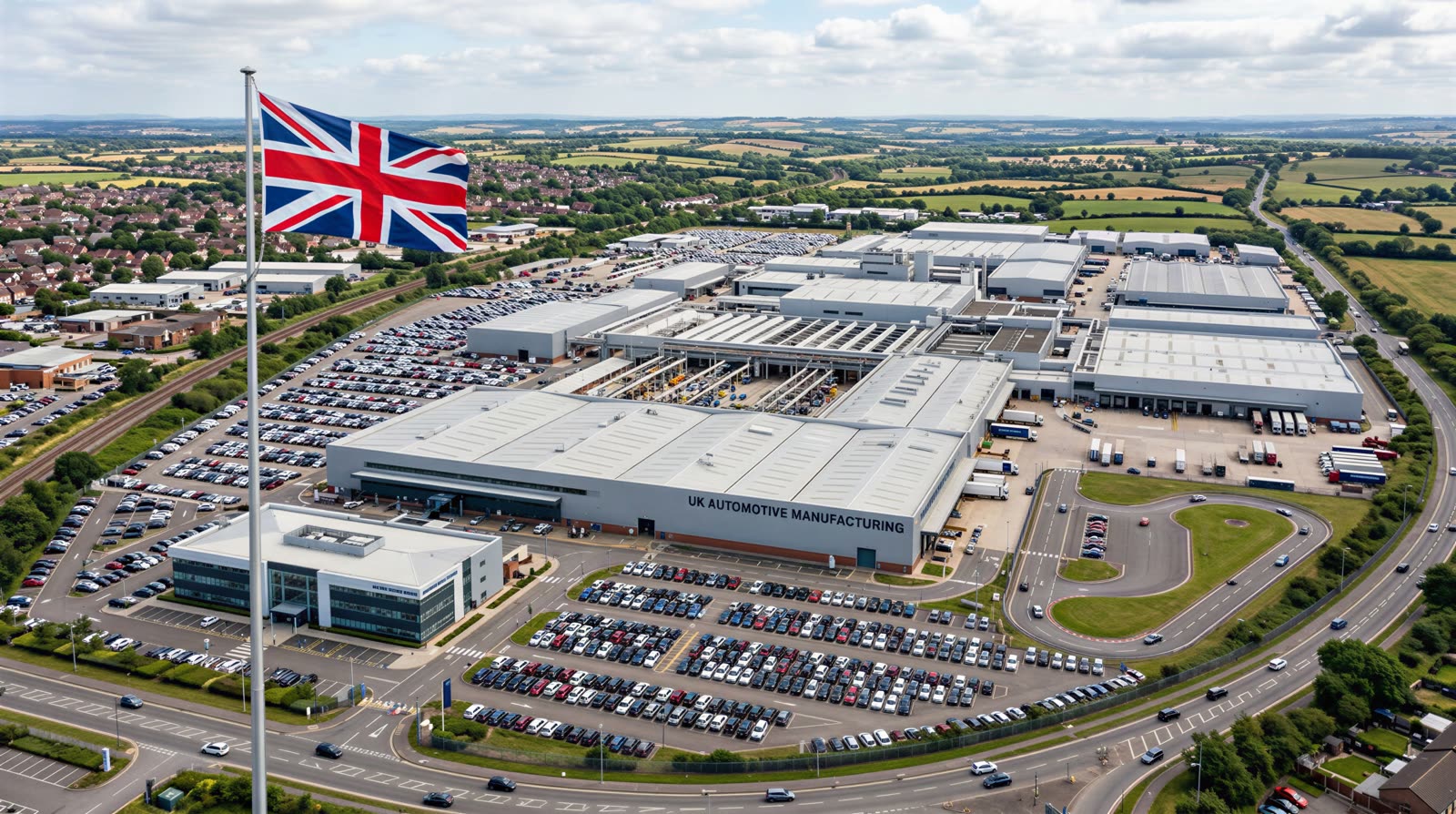
The UK was once the world's second largest car producer. At its peak in 1972, British factories turned out over 1.9 million vehicles a year. Today that figure is closer to 800,000, concentrated in a handful of plants — while dozens of factories that once defined entire communities have fallen silent, been demolished, or found entirely new lives. Here's the complete picture.
Still Active
Nissan
The most productive car factory in Britain today, accounting for roughly one in three cars built in the UK. Currently builds the Qashqai, Juke, and Leaf. The SMMT named Sunderland's next-generation EV production as the primary driver behind the expected return to growth in 2026. Reports in mid-2026 suggest Nissan may also begin producing vehicles for Chery (the Chinese group behind Omoda and Jaecoo) at the same site — one of the more striking potential developments in British manufacturing history.
Jaguar Land Rover
Builds the Range Rover, Range Rover Sport, Range Rover Velar, and Land Rover Discovery. Britain's largest domestic-owned manufacturing operation. A significant cyber-attack in 2025 disrupted production severely, contributing to a 21.7% fall in JLR output that year. Recovery underway in 2026.
Jaguar Land Rover
Initially building the Anglia and later the Escort through to 2002. Transferred to Jaguar for the X-Type in the early 2000s. Now builds the Range Rover Evoque and Discovery Sport. One of the more striking transformations on this list — from budget Ford hatchbacks to premium Land Rovers on the same footprint.
MINI
The Cowley plant has been building cars since 1914, making it one of the oldest continuously operating automotive sites in Britain. Originally Morris Motors, it became the centre of British Leyland's volume car operations before BMW retained it in 2000 when the rest of Rover Group was sold off. Now builds the MINI Cooper 3-Door, 5-Door, and Convertible. The Cowley plant and the MINI brand are central to BMW's UK EV transition plans.
Toyota
Builds the Corolla Hatchback, Corolla Touring Sports, and from 2026 the GR Corolla performance model. Also assembles the Suzuki Swace under a longstanding rebadging agreement. Toyota additionally operates an engine plant at Deeside, North Wales. Consistently one of the most productive and stable plants in the UK, maintaining output through periods when other facilities were struggling.
Bentley
Bentley has built cars in Crewe since 1946, when the factory was established after the Second World War. Every Bentley sold globally is hand-built here — the Bentayga, Continental GT, and Flying Spur. Volkswagen Group, which owns Bentley, has invested substantially in Crewe's EV capability. Low volume, exceptionally high value per unit.
Rolls-Royce
Purpose-built factory opened in 2003 on the Goodwood Estate. Every Rolls-Royce sold globally is built here — the Ghost, Phantom, Cullinan, and the all-electric Spectre. Owned by BMW Group but produced entirely on British soil. One of the more unusual manufacturing operations in the country — part factory, part craftsman's workshop.
Aston Martin
Opened as Aston Martin's primary headquarters and production facility. Builds the DB12, Vantage, and DBS 770 Ultimate. The brand has faced significant financial pressures but Gaydon remains operational.
Aston Martin
Opened specifically to produce the DBX SUV — the brand's highest-volume model and the car most responsible for keeping the company financially viable in recent years.
McLaren
The McLaren Production Centre opened in 2011, purpose-built to support the brand's return to road car production. Builds the Artura, GT, and various track variants. Every McLaren sold globally is produced in Woking.
Morgan
Morgan has occupied the same Malvern site since 1919, making it one of the longest-running car manufacturing operations in Britain on a continuous basis. Still largely hand-built. Produces the Plus Four, Plus Six, and Super 3 in small volumes.
Lotus
Lotus has been building cars at its Hethel circuit and factory since 1966. Currently produces the Emira sports car — the last petrol Lotus — alongside the all-electric Eletre and Emeya models. Chinese-owned by Geely since 2017 but manufactured in Norfolk.
The Closed Giants
Longbridge
The most emotionally significant closure in British automotive history. Herbert Austin built his first factory here in 1905 and by the late 1960s Longbridge employed 25,000 workers, producing the original Mini among many others. After decades of industrial strife, government bailouts, and brand erosion through the British Leyland era, MG Rover went into administration in April 2005 with the loss of 6,500 jobs. The site partially reopened in 2007 under Chinese ownership — first Nanjing Automobile, then SAIC — producing small numbers of MG TFs before assembly ended entirely in 2016. Today the Longbridge plant operates as the MG Motor Technical Centre, where Chinese-built MG vehicles are inspected before being sold in Europe. As of April 2025, just 46 people worked on the site that once employed 25,000.
Dagenham
Ford's Dagenham plant was the heartbeat of British mass motoring for most of the twentieth century, opening in 1931 as one of the largest integrated manufacturing complexes in Europe. At its peak it built complete cars including the Anglia, Cortina, and Fiesta across four generations. Car production ended in 2002 when Ford moved vehicle assembly elsewhere, but Dagenham didn't close — it pivoted to engine manufacturing and remains active today, producing close to a million diesel engines per year for Ford vehicles worldwide.
Cowley Body Plant
While the main Cowley assembly plant continues as the MINI factory, the broader Cowley complex that once stretched across much of East Oxford has been substantially demolished. The former body plant and press shops were cleared in the early 2000s and the site redeveloped into a mixed commercial and retail area known as Templars Square and surrounding development. The manufacturing footprint is a fraction of what it once was.
Linwood
Linwood was built in the 1960s as a deliberate attempt to bring mass car manufacturing to Scotland. The Hillman Imp, a rear-engined competitor to the Mini, was the plant's sole significant product. Persistent industrial relations problems, quality issues, and the Imp's commercial failure led to closure in 1981 with the loss of around 8,000 jobs. The site was subsequently demolished. Nothing related to car manufacturing operates there today.
Ryton
The Ryton plant near Coventry had a long history under various owners before Peugeot took control. Its final product was the 206 — one of Europe's best-selling cars in the early 2000s — but Peugeot moved 206 production to Slovakia in 2006 and closed Ryton entirely. The site was cleared and redeveloped into a logistics and distribution park, which it remains today.
Luton
Vauxhall has had operations in Luton since 1905. Car production ended there in 2002, but the plant continued producing vans — the Vivaro and its badge-engineered equivalents for Renault and Nissan — under Stellantis ownership. That era ended too when Stellantis closed the Luton van plant in April 2025, a decision that contributed significantly to the collapse in UK commercial vehicle production figures that year (down 62.3%). The Ellesmere Port plant in Cheshire, which once built the Astra, was converted to produce the electric Vauxhall Combo-e van and remains operational under Stellantis.
Browns Lane
Browns Lane was Jaguar's spiritual home for over five decades, the factory where the E-Type, XJ6, and XK8 were built. Ford, which owned Jaguar at the time, closed Browns Lane in 2004 citing losses and surplus capacity. The site has since been cleared and redeveloped into a housing estate.
Canley
The Standard Motor Company began building cars at Canley from after the First World War. Under Triumph ownership the plant built the Dolomite, Toledo, and various other models before the Triumph brand was wound down and Canley closed in 1980. The site is now a retail and business park.
Speke
The Speke plant near Liverpool Airport was notorious even by the standards of 1970s British industrial relations, with chronic strike action plaguing production of the TR7 sports car. British Leyland closed it in 1978. The site has been absorbed into what is now Liverpool John Lennon Airport's surrounding industrial zone.
The Pattern
The history of British car manufacturing is a story of contraction in volume, consolidation in geography, and elevation in value. The factories that closed were almost all volume producers — sites that needed scale and consistency to survive and found neither in the turbulent decades from the 1970s onward. The factories that remain are either premium and specialist operations producing high-value cars for export, or foreign-owned volume plants that came to Britain precisely because it offered something the original British manufacturers couldn't — stable industrial relations, strategic export positioning, and government incentives.
What's striking in 2026 is that the next chapter is being written partly by the same Chinese manufacturers who picked through the wreckage of some of these closures. SAIC — which now operates the remnants of Longbridge as a technical centre — also owns MG, now one of the UK's best-selling car brands, its vehicles built in China and shipped to Britain. The wheel has turned completely.
Whether your car was built in Sunderland, Solihull, or Shanghai, autOracle helps you understand what it needs and what it's worth keeping on the road.
Know exactly what's wrong with your car.
Describe your symptoms in plain English and get an instant diagnosis.
Join autOracle waitlistSources
- Wikipedia, “Automotive industry in the United Kingdom” — en.wikipedia.org
- Wikipedia, “British Leyland” — en.wikipedia.org
- Wikipedia, “Longbridge plant” — en.wikipedia.org
- AROnline, “Longbridge car factory history: rise and fall of ‘The Austin’” — aronline.co.uk
- AROnline, “UK car production by the multinationals in the 1970s” — aronline.co.uk
- Swansway Garages, “Car Manufacturers in the UK: Who Still Builds Cars in Britain?” — swanswaygarages.com
- Made in Great Britain, “Best British Cars — Which cars are made in the UK in 2026” — madeingreatbritain.uk
- Fleet News, “UK vehicle production figures for 2025” — fleetnews.co.uk
- Hagerty UK, “9 British factories that built the unexceptional concours stars” — hagerty.co.uk
- EV Infrastructure News, “EV production rises in ‘toughest year’ for UK car manufacturing” — evinfrastructurenews.com
- SMMT, “UK Vehicle Production Data 2025” — smmt.co.uk
