2013-2017 Mk7 Ford Fiesta: The Most Common MOT Failures, and How to Catch Them First
The autOracle Team
Sep 18, 2026
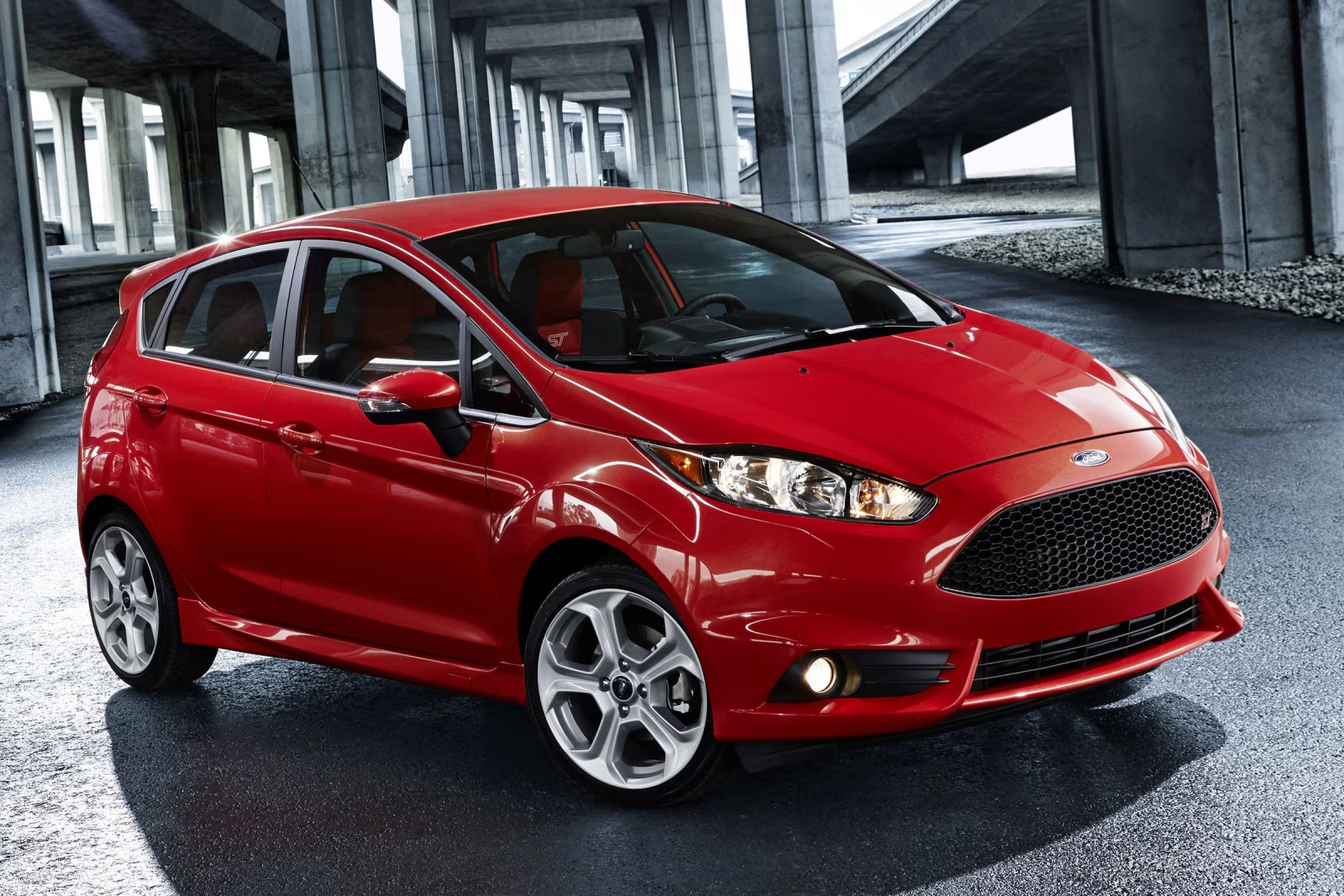
The Ford Fiesta has been Britain's best-selling car for the better part of two decades, which means it also quietly dominates MOT bay statistics by sheer volume — more of them go through testing than almost any other car on the road. That's genuinely useful if you own one, because it means there's an enormous, statistically solid picture of exactly what tends to go wrong, and when. For a 2016 Fiesta specifically — now approaching a decade old — the pattern is clear enough that you can walk into your next MOT knowing, with real confidence, what the tester is most likely to pull it up on.
Here's what the actual DVSA data says, rather than generic advice.
The Three Areas That Account for Most Failures
Across the Fiesta's failure data, three categories dominate, and they're worth knowing in order because they tell you exactly where to look first: suspension (28%), brakes (26.5%), and tyres (21.9%). Between them, those three account for the overwhelming majority of everything a Fiesta fails on. Notably, the Fiesta actually performs better than the average car of its year on brakes and visibility — but it genuinely struggles, relative to its peers, on steering, lights and electrics, and suspension.
For context on the specific 2016 model year: DVSA data covering 118,865 individual 2016 Fiestas across 272,756 tests recorded a defect rate of roughly 166 faults per 100 vehicles — about 10% higher than the average car of the same year. Not alarming, but not spotless either, and the defect rate climbs noticeably as mileage rises, which matters for a car now typically sitting well over 100,000 miles.
Suspension — the Single Biggest Thing to Check
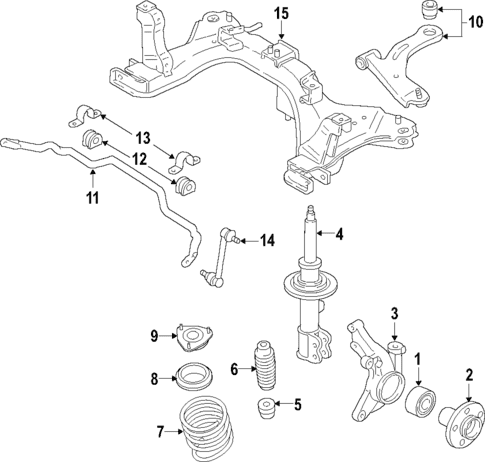
A typical front suspension layout — the lower arm (wishbone) bushings and anti-roll bar drop links are among the parts most often flagged on a Fiesta MOT.
If your 2016 Fiesta fails, the statistically likeliest culprit is suspension wear, and one specific fault leads the entire category nationally: "a suspension pin, bush or joint excessively worn" — the single most common Fiesta failure in the UK, responsible for over 109,000 failures in one year alone.
In plain terms, this usually means the rubber bushes that cushion the suspension arms have perished, or a ball joint has developed play. On the Fiesta specifically, the components that come up again and again are the rear trailing arm bushes, front lower arm (wishbone) bushes, and anti-roll bar drop links. The parts themselves are genuinely cheap — drop links and wishbone bushes often run £15-30 each — but the labour and the wheel alignment afterward are where the cost sits. Realistically budget £80-150 per side for wishbone replacement including alignment.
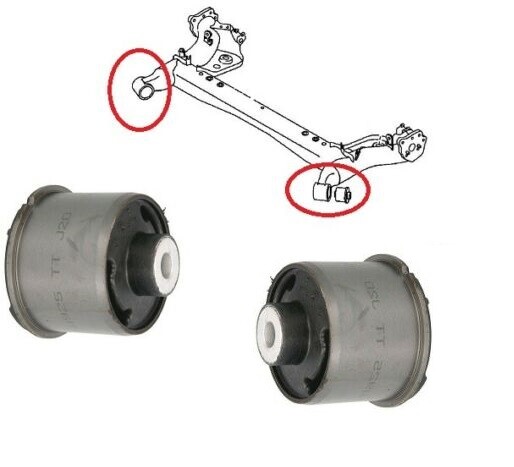
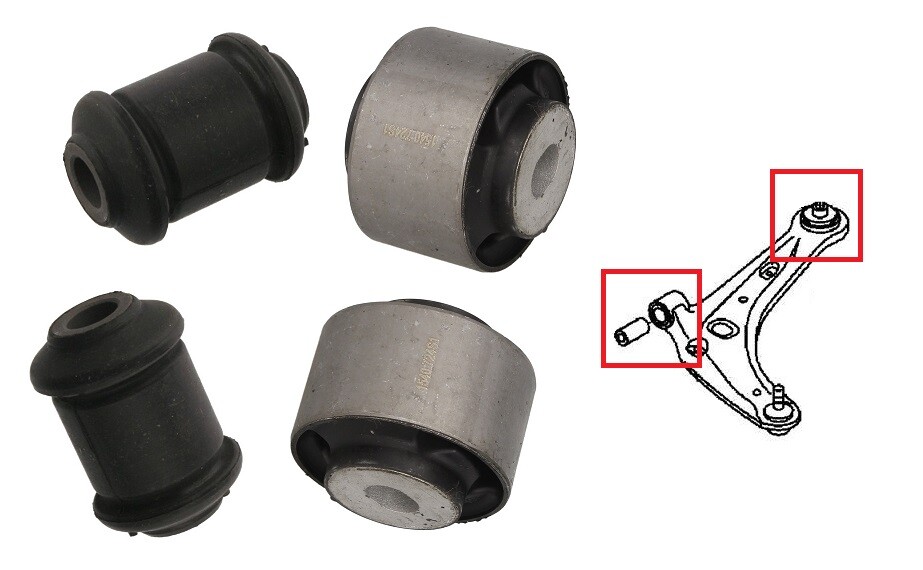
Rear trailing arm bushes. / Front lower arm (wishbone) bushes.
There's a related one that catches a lot of Fiestas out, especially through winter: corroded coil springs snapping, typically near the bottom coil. It's abrupt when it happens and it's an automatic failure, though it's also the kind of thing that either passes fine or fails clearly, with little in between.
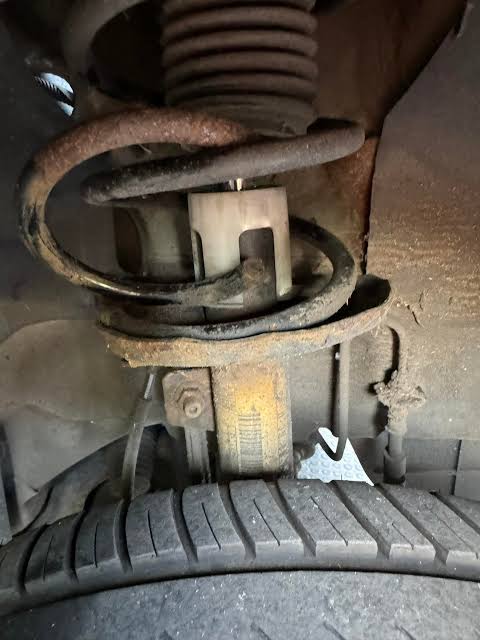
A corroded coil spring, snapped near the bottom coil — an automatic MOT failure.
Not sure which bush, drop link, or part number your Fiesta needs?
autOracle knows the exact spec for your model and year — part numbers, bulb types, everything — so you're not guessing at the parts counter.
Join autOracle waitlistBrakes — Your Second Most Likely Fail, but Usually a Cheaper One
Brakes are the second-biggest failure category, but the good news is these are among the most predictable and least expensive to sort. The usual advisories building toward a failure are worn brake pads approaching the limit, and — more of a Fiesta-specific pattern worth knowing — brake pipe corrosion, where the metal brake lines rust over the years. Pads are a routine, cheap fix; corroded brake pipes are a bigger job but a genuinely important safety one, not something to defer.
Tyres and Lights — the "Quick Wins" You Can Check Yourself
Tyres are the third major category, and they're the easiest to catch before you ever book the test. The specific failure is straightforward — tread depth below the 1.6mm legal minimum — and it's entirely checkable at home with the 20p test. The 2015-2016 Fiestas in particular show higher-than-average tyre wear rates in the data, so this is one worth checking a few weeks before your test date rather than the night before, giving you time to react.
Lights and electrics are a genuine weak spot for the Fiesta relative to its peers, and the common advisories here are cheap to fix but easy to fail on: headlight aim out of alignment, a stop lamp not working (over 100,000 UK Fiesta failures a year cite an inoperative or partly-failed brake light), and rear number plate lamp failures. A blown bulb is a few pounds; failing your MOT on one is genuinely avoidable with a five-minute walk-around beforehand.
The Steering Item Worth Taking Seriously
One category where the Fiesta scores worse than average is steering, and there are two specific advisories to watch, because they sit on a spectrum from minor to serious. The mild version is a "steering rack gaiter or ball joint dust cover: missing or no longer prevents the ingress of dirt" — an advisory that, left alone, lets grit into the joint and accelerates the wear underneath. The serious end of that same component is "a steering ball joint: worn to the extent there is a serious risk of detachment," which is an outright dangerous fault, not just an MOT inconvenience. If a dust cover advisory appears one year, it's genuinely worth addressing before it becomes the worn joint underneath it a year or two later.
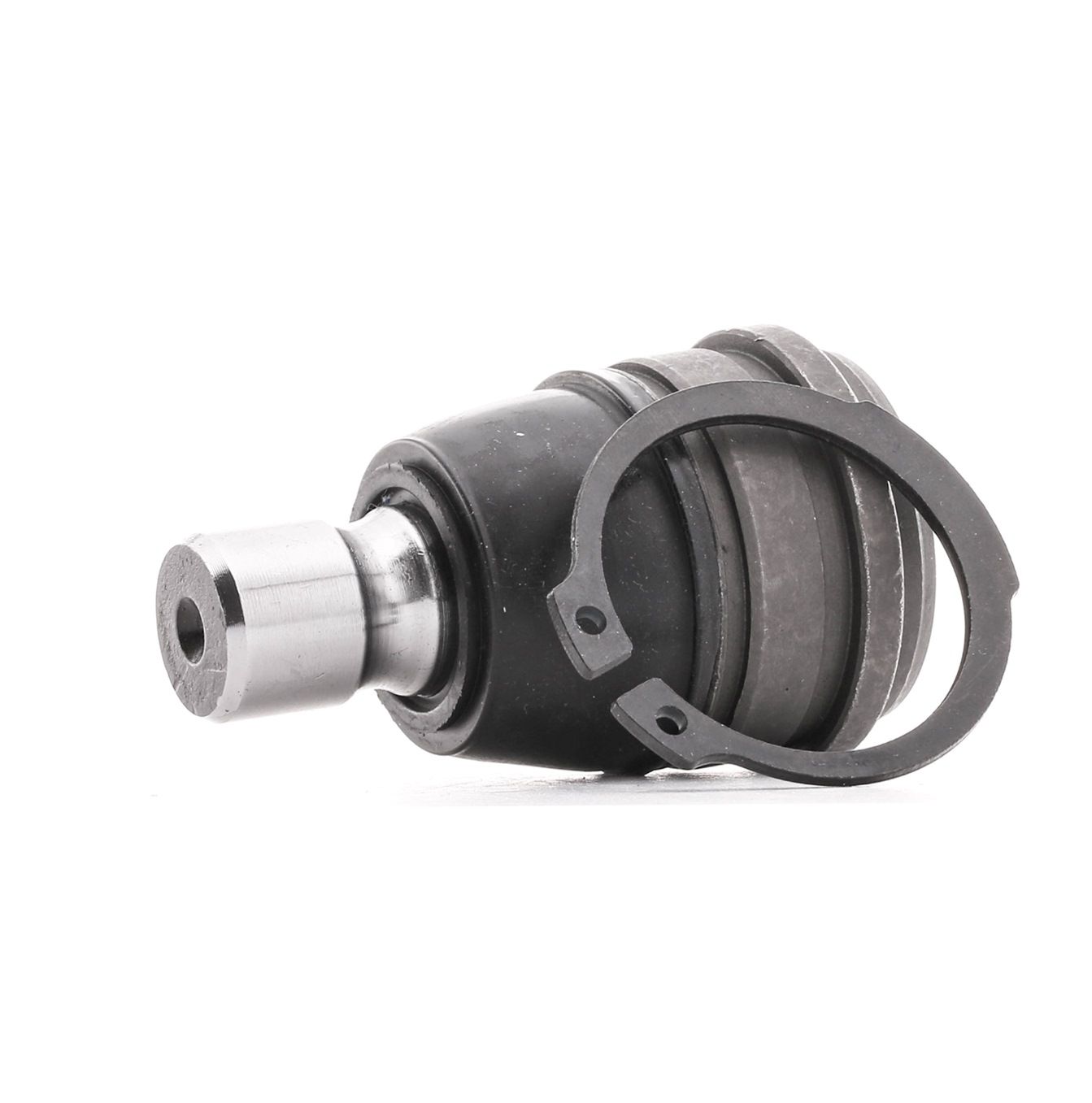
A worn steering ball joint — the serious end of the same fault that starts as a torn dust cover.
The Pattern That Matters Most for a Used Buyer
Here's the single most useful statistic in all the Fiesta data, and it's the one that turns a list of common faults into something actually predictive: over 60% of Fiesta MOT failures arise from items that were previously logged as advisories. In other words, the car usually tells you it's going to fail, a year or two in advance, through its advisory history — if anyone bothers to read it.
A 2016 Fiesta carrying three consecutive years of the same trailing-arm bush advisory, or the same sill corrosion note, is a materially higher repair risk than one with only isolated, one-off advisories. This is exactly why running a full MOT history before buying a used Fiesta — reading not just whether it passed, but what advisories it has carried forward year after year — is worth far more than the headline pass/fail result alone.
The Honest Bottom Line for a 2016 Fiesta Owner
A 2016 Fiesta going into its MOT this year has a genuinely manageable risk profile, provided you know where to look. A 3-year-old Fiesta passes first time about 88% of the time; by 7 years old that's dropped to around 75%, and a 2016 car is now past that point, right in the zone where suspension and corrosion advisories start converting into failures. But the average repair bill when a Fiesta does fail sits at roughly £108 — not catastrophic, and the vast majority of it is concentrated in a handful of cheap, predictable, well-documented components you can genuinely check or pre-empt.
The takeaway isn't "dread it." It's that a 2016 Fiesta is one of the most predictable cars in the country when it comes to MOT outcomes — check the suspension, walk around the lights, do the 20p tyre test, and read the car's own advisory history, and you'll almost always know what's coming before the tester does.
autOracle can pull your specific Fiesta's full DVSA history, read which advisories it's been carrying forward, and tell you exactly what's likely to come up at your next MOT — before you book it.
Know exactly what's wrong with your car.
Describe your symptoms in plain English and get an instant diagnosis.
Join autOracle waitlistSources
- MOT Checkup, “Ford Fiesta Common MOT Failures (UK Data)” — motcheckup.co.uk
- MOT Search, “Common faults for Ford FIESTA, 2016 – MOT Statistics”, 118,865 cars / 272,756 tests, 2024-2025 dataset — motsearch.co.uk
- Pass Your MOT, “Ford Fiesta MOT Pass Rate & Common Failures”, DVSA anonymised data 2005-2024 — passyourmot.co.uk
- Plate Insight, “Ford Fiesta Years to Avoid: 11.5M UK MOT Tests Ranked (2026)” — plateinsight.co.uk
- MOT Data UK, “Ford Fiesta - UK MOT Pass Rates”, 58 million DVSA test results — motdata.uk
- Car Known Faults, “Ford Fiesta Known Faults” — carknownfaults.com
- CarGarages.co.uk, “Ford Common Problems, MOT Failures & Repair Patterns” — cargarages.co.uk
- CarCostCheck, “Ford Fiesta Common Problems (2026)” — carcostcheck.co.uk
- Honest Car Check, “Ford Fiesta common problems and reliability issues” — honestcarcheck.co.uk
